Elastic energy from force–extension graphs
Key idea: Area under a force–extension graph gives work done in stretching. That work is fully recoverable as elastic potential energy only when deformation is elastic and dissipation negligible.
Offline pages
Saved on this device only. Connect at least once every 30 days to confirm Premium. Sign-out or a change of account removes saved copies.
Loading guide controls…
Guided lessons · coming soon
Guided lesson
Guided steps
- Compare energy stored by deformation with energy stored in fields.
- Explain why graph area gives work and identify its units.
- Split the graph at the change of gradient.
- Find both region areas and the total energy.
- Find the extra energy stored in the already stretched spring.
- Explain why the extra work is a trapezium.
- Compare work put in, energy recovered and energy dissipated.
- Find the energy dissipated in one loading–unloading cycle.
- Recall the area method, its assumptions and the energy stores.
On this page
You stopped at:
ContinueA stretched bow, a drawn catapult and a compressed car spring all store energy that they release when they spring back. This lesson compares elastic potential energy with the two kinds of field potential energy, and shows how to find it from the area under a force–extension graph.
Three kinds of potential energy
Potential energy is energy stored because of the position or shape of things, not their motion.
| Store | Stored because of | Example |
|---|---|---|
| gravitational potential energy | the positions of masses in a gravitational field | a load raised above the ground |
| electric potential energy | the positions of charges in an electric field | an electron moved towards a negative plate |
| elastic potential energy | the deformation of a body | a stretched spring or a bent ruler |
Gravitational and electric potential energy change when a field force does work. Elastic potential energy is different: it is stored in a body that has been stretched, squashed or bent, by the forces between its particles.
Elastic potential energy from a force–extension graph
When a spring or wire is stretched slowly by a force F, the work done over a small extra extension Δ x is FΔ x, the area of a thin strip under the force–extension graph. Adding all the strips gives the work done in stretching it: the area under the force–extension graph. For an ideal elastic material with negligible dissipation, this work is stored as elastic potential energy and recovered during unloading. A material can regain its original shape while dissipating energy; compare its loading and unloading curves.
For a spring that obeys Hooke’s law, F = kx, the graph is a straight line through the origin and the area is a triangle:
For a spring stretched further, from extension x₁ to x₂, subtract the energies stored at each extension:
This is not (1/2)k(x₂-x₁)², because the spring was already exerting a force at the start. When the graph is not a straight line, split the area into triangles, rectangles and trapezia.
Worked example 1
Energy from a two-part graph
Problem
A material is stretched slowly from its natural length and follows the force–extension graph below. Assume elastic deformation with negligible dissipation over this range. The graph joins (0,0), (0.10 m,20 N) and (0.20 m,50 N) with straight lines. Find the elastic potential energy stored at an extension of 0.20 m.
Piecewise elastic loading
Applied force versus extension, with sample points [(0, 0), (0.1, 20), (0.2, 50)]. The stated straight segments define the loading path.
Scroll across the figure to read all labels.
![Applied force versus extension, with sample points [(0, 0), (0.1, 20), (0.2, 50)]. The stated straight segments define the loading path.](data:image/svg+xml;base64,PHN2ZyBkYXRhLWJ1aWxkLW93bmVyPSJzY3JpcHRzL3Zpc3VhbHMvcGxvdGx5IiBkYXRhLWZpZ3VyZS1pZD0icGh5c2ljczpkYXRhL3dvcmstZW5lcmd5LWFuZC1wb3dlci9waWVjZXdpc2UtZWxhc3RpYy1sb2FkaW5nLWV4YW1wbGUiIGNsYXNzPSJtYWluLXN2ZyIgeG1sbnM9Imh0dHA6Ly93d3cudzMub3JnLzIwMDAvc3ZnIiB3aWR0aD0iNzIwIiBoZWlnaHQ9IjUwMCIgdmlld0JveD0iMCAwIDcyMCA1MDAiIHJvbGU9ImltZyI+PG1ldGFkYXRhPnsmcXVvdDtMb2FkaW5nIGZvcmNlJnF1b3Q7OnsmcXVvdDt4JnF1b3Q7OlswLDAuMSwwLjJdLCZxdW90O3kmcXVvdDs6WzAsMjAsNTBdLCZxdW90O3hFcnJvciZxdW90OzpudWxsLCZxdW90O3lFcnJvciZxdW90OzpudWxsfX08L21ldGFkYXRhPjx0aXRsZT5QaWVjZXdpc2UgZWxhc3RpYyBsb2FkaW5nPC90aXRsZT48ZGVzYz5BcHBsaWVkIGZvcmNlIHZlcnN1cyBleHRlbnNpb24sIHdpdGggc2FtcGxlIHBvaW50cyBbKDAsIDApLCAoMC4xLCAyMCksICgwLjIsIDUwKV0uIFRoZSBzdGF0ZWQgc3RyYWlnaHQgc2VnbWVudHMgZGVmaW5lIHRoZSBsb2FkaW5nIHBhdGguPC9kZXNjPjxyZWN0IHdpZHRoPSI3MjAiIGhlaWdodD0iNTAwIiByeD0iMTIiIGZpbGw9IiNmZmZmZmYiLz48bGluZSB4MT0iMTAwLjAwIiB5MT0iMzYiIHgyPSIxMDAuMDAiIHkyPSI0MTQiIHN0cm9rZT0iI2RjZTNlMCIvPjx0ZXh0IHg9IjEwMC4wMCIgeT0iNDM5IiB0ZXh0LWFuY2hvcj0ibWlkZGxlIiBmaWxsPSIjM2E0YjU0IiBmb250LWZhbWlseT0ic3lzdGVtLXVpLHNhbnMtc2VyaWYiIGZvbnQtc2l6ZT0iMTMiPjA8L3RleHQ+PGxpbmUgeDE9IjI0Ni4wMCIgeTE9IjM2IiB4Mj0iMjQ2LjAwIiB5Mj0iNDE0IiBzdHJva2U9IiNkY2UzZTAiLz48dGV4dCB4PSIyNDYuMDAiIHk9IjQzOSIgdGV4dC1hbmNob3I9Im1pZGRsZSIgZmlsbD0iIzNhNGI1NCIgZm9udC1mYW1pbHk9InN5c3RlbS11aSxzYW5zLXNlcmlmIiBmb250LXNpemU9IjEzIj4wLjA1PC90ZXh0PjxsaW5lIHgxPSIzOTIuMDAiIHkxPSIzNiIgeDI9IjM5Mi4wMCIgeTI9IjQxNCIgc3Ryb2tlPSIjZGNlM2UwIi8+PHRleHQgeD0iMzkyLjAwIiB5PSI0MzkiIHRleHQtYW5jaG9yPSJtaWRkbGUiIGZpbGw9IiMzYTRiNTQiIGZvbnQtZmFtaWx5PSJzeXN0ZW0tdWksc2Fucy1zZXJpZiIgZm9udC1zaXplPSIxMyI+MC4xPC90ZXh0PjxsaW5lIHgxPSI1MzguMDAiIHkxPSIzNiIgeDI9IjUzOC4wMCIgeTI9IjQxNCIgc3Ryb2tlPSIjZGNlM2UwIi8+PHRleHQgeD0iNTM4LjAwIiB5PSI0MzkiIHRleHQtYW5jaG9yPSJtaWRkbGUiIGZpbGw9IiMzYTRiNTQiIGZvbnQtZmFtaWx5PSJzeXN0ZW0tdWksc2Fucy1zZXJpZiIgZm9udC1zaXplPSIxMyI+MC4xNTwvdGV4dD48bGluZSB4MT0iNjg0LjAwIiB5MT0iMzYiIHgyPSI2ODQuMDAiIHkyPSI0MTQiIHN0cm9rZT0iI2RjZTNlMCIvPjx0ZXh0IHg9IjY4NC4wMCIgeT0iNDM5IiB0ZXh0LWFuY2hvcj0ibWlkZGxlIiBmaWxsPSIjM2E0YjU0IiBmb250LWZhbWlseT0ic3lzdGVtLXVpLHNhbnMtc2VyaWYiIGZvbnQtc2l6ZT0iMTMiPjAuMjwvdGV4dD48bGluZSB4MT0iMTAwIiB5MT0iNDE0LjAwIiB4Mj0iNjg0IiB5Mj0iNDE0LjAwIiBzdHJva2U9IiNkY2UzZTAiLz48dGV4dCB4PSI4OCIgeT0iNDE5LjAwIiB0ZXh0LWFuY2hvcj0iZW5kIiBmaWxsPSIjM2E0YjU0IiBmb250LWZhbWlseT0ic3lzdGVtLXVpLHNhbnMtc2VyaWYiIGZvbnQtc2l6ZT0iMTMiPjA8L3RleHQ+PGxpbmUgeDE9IjEwMCIgeTE9IjMzOC40MCIgeDI9IjY4NCIgeTI9IjMzOC40MCIgc3Ryb2tlPSIjZGNlM2UwIi8+PHRleHQgeD0iODgiIHk9IjM0My40MCIgdGV4dC1hbmNob3I9ImVuZCIgZmlsbD0iIzNhNGI1NCIgZm9udC1mYW1pbHk9InN5c3RlbS11aSxzYW5zLXNlcmlmIiBmb250LXNpemU9IjEzIj4xMDwvdGV4dD48bGluZSB4MT0iMTAwIiB5MT0iMjYyLjgwIiB4Mj0iNjg0IiB5Mj0iMjYyLjgwIiBzdHJva2U9IiNkY2UzZTAiLz48dGV4dCB4PSI4OCIgeT0iMjY3LjgwIiB0ZXh0LWFuY2hvcj0iZW5kIiBmaWxsPSIjM2E0YjU0IiBmb250LWZhbWlseT0ic3lzdGVtLXVpLHNhbnMtc2VyaWYiIGZvbnQtc2l6ZT0iMTMiPjIwPC90ZXh0PjxsaW5lIHgxPSIxMDAiIHkxPSIxODcuMjAiIHgyPSI2ODQiIHkyPSIxODcuMjAiIHN0cm9rZT0iI2RjZTNlMCIvPjx0ZXh0IHg9Ijg4IiB5PSIxOTIuMjAiIHRleHQtYW5jaG9yPSJlbmQiIGZpbGw9IiMzYTRiNTQiIGZvbnQtZmFtaWx5PSJzeXN0ZW0tdWksc2Fucy1zZXJpZiIgZm9udC1zaXplPSIxMyI+MzA8L3RleHQ+PGxpbmUgeDE9IjEwMCIgeTE9IjExMS42MCIgeDI9IjY4NCIgeTI9IjExMS42MCIgc3Ryb2tlPSIjZGNlM2UwIi8+PHRleHQgeD0iODgiIHk9IjExNi42MCIgdGV4dC1hbmNob3I9ImVuZCIgZmlsbD0iIzNhNGI1NCIgZm9udC1mYW1pbHk9InN5c3RlbS11aSxzYW5zLXNlcmlmIiBmb250LXNpemU9IjEzIj40MDwvdGV4dD48bGluZSB4MT0iMTAwIiB5MT0iMzYuMDAiIHgyPSI2ODQiIHkyPSIzNi4wMCIgc3Ryb2tlPSIjZGNlM2UwIi8+PHRleHQgeD0iODgiIHk9IjQxLjAwIiB0ZXh0LWFuY2hvcj0iZW5kIiBmaWxsPSIjM2E0YjU0IiBmb250LWZhbWlseT0ic3lzdGVtLXVpLHNhbnMtc2VyaWYiIGZvbnQtc2l6ZT0iMTMiPjUwPC90ZXh0PjxsaW5lIHgxPSIxMDAiIHkxPSI0MTQiIHgyPSI2ODQiIHkyPSI0MTQiIHN0cm9rZT0iIzNhNGI1NCIgc3Ryb2tlLXdpZHRoPSIyIi8+PGxpbmUgeDE9IjEwMCIgeTE9IjM2IiB4Mj0iMTAwIiB5Mj0iNDE0IiBzdHJva2U9IiMzYTRiNTQiIHN0cm9rZS13aWR0aD0iMiIvPjxwYXRoIGQ9Ik0xMDAuMDAsNDE0LjAwIEwzOTIuMDAsMjYyLjgwIEw2ODQuMDAsMzYuMDAiIGZpbGw9Im5vbmUiIHN0cm9rZT0iIzFiNDVhYiIgc3Ryb2tlLXdpZHRoPSIzIiBzdHJva2UtbGluZWpvaW49InJvdW5kIiBzdHJva2UtbGluZWNhcD0icm91bmQiIHN0cm9rZS1kYXNoYXJyYXk9IiIvPjxjaXJjbGUgY3g9IjEwMC4wMCIgY3k9IjQxNC4wMCIgcj0iNCIgZmlsbD0iIzFiNDVhYiIvPjxjaXJjbGUgY3g9IjM5Mi4wMCIgY3k9IjI2Mi44MCIgcj0iNCIgZmlsbD0iIzFiNDVhYiIvPjxjaXJjbGUgY3g9IjY4NC4wMCIgY3k9IjM2LjAwIiByPSI0IiBmaWxsPSIjMWI0NWFiIi8+PHRleHQgeD0iMzkyLjAwIiB5PSI0NjUiIHRleHQtYW5jaG9yPSJtaWRkbGUiIGZpbGw9IiMxODI1MmIiIGZvbnQtZmFtaWx5PSJzeXN0ZW0tdWksc2Fucy1zZXJpZiIgZm9udC1zaXplPSIxNSIgZm9udC13ZWlnaHQ9IjYwMCI+RXh0ZW5zaW9uLCB4IChtKTwvdGV4dD48dGV4dCB4PSIyOCIgeT0iMjI1LjAwIiB0ZXh0LWFuY2hvcj0ibWlkZGxlIiB0cmFuc2Zvcm09InJvdGF0ZSgtOTAgMjggMjI1LjAwKSIgZmlsbD0iIzE4MjUyYiIgZm9udC1mYW1pbHk9InN5c3RlbS11aSxzYW5zLXNlcmlmIiBmb250LXNpemU9IjE1IiBmb250LXdlaWdodD0iNjAwIj5BcHBsaWVkIGZvcmNlLCBGIChOKTwvdGV4dD48L3N2Zz4K)
![Applied force versus extension, with sample points [(0, 0), (0.1, 20), (0.2, 50)]. The stated straight segments define the loading path.](data:image/svg+xml;base64,PHN2ZyBkYXRhLWJ1aWxkLW93bmVyPSJzY3JpcHRzL3Zpc3VhbHMvcGxvdGx5IiBkYXRhLWZpZ3VyZS1pZD0icGh5c2ljczpkYXRhL3dvcmstZW5lcmd5LWFuZC1wb3dlci9waWVjZXdpc2UtZWxhc3RpYy1sb2FkaW5nLWV4YW1wbGUiIGNsYXNzPSJtYWluLXN2ZyIgeG1sbnM9Imh0dHA6Ly93d3cudzMub3JnLzIwMDAvc3ZnIiB3aWR0aD0iNzIwIiBoZWlnaHQ9IjUwMCIgdmlld0JveD0iMCAwIDcyMCA1MDAiIHJvbGU9ImltZyI+PG1ldGFkYXRhPnsmcXVvdDtMb2FkaW5nIGZvcmNlJnF1b3Q7OnsmcXVvdDt4JnF1b3Q7OlswLDAuMSwwLjJdLCZxdW90O3kmcXVvdDs6WzAsMjAsNTBdLCZxdW90O3hFcnJvciZxdW90OzpudWxsLCZxdW90O3lFcnJvciZxdW90OzpudWxsfX08L21ldGFkYXRhPjx0aXRsZT5QaWVjZXdpc2UgZWxhc3RpYyBsb2FkaW5nPC90aXRsZT48ZGVzYz5BcHBsaWVkIGZvcmNlIHZlcnN1cyBleHRlbnNpb24sIHdpdGggc2FtcGxlIHBvaW50cyBbKDAsIDApLCAoMC4xLCAyMCksICgwLjIsIDUwKV0uIFRoZSBzdGF0ZWQgc3RyYWlnaHQgc2VnbWVudHMgZGVmaW5lIHRoZSBsb2FkaW5nIHBhdGguPC9kZXNjPjxyZWN0IHdpZHRoPSI3MjAiIGhlaWdodD0iNTAwIiByeD0iMTIiIGZpbGw9IiMxNzIzMjkiLz48bGluZSB4MT0iMTAwLjAwIiB5MT0iMzYiIHgyPSIxMDAuMDAiIHkyPSI0MTQiIHN0cm9rZT0iIzMzNDM0YiIvPjx0ZXh0IHg9IjEwMC4wMCIgeT0iNDM5IiB0ZXh0LWFuY2hvcj0ibWlkZGxlIiBmaWxsPSIjYzlkNWQ3IiBmb250LWZhbWlseT0ic3lzdGVtLXVpLHNhbnMtc2VyaWYiIGZvbnQtc2l6ZT0iMTMiPjA8L3RleHQ+PGxpbmUgeDE9IjI0Ni4wMCIgeTE9IjM2IiB4Mj0iMjQ2LjAwIiB5Mj0iNDE0IiBzdHJva2U9IiMzMzQzNGIiLz48dGV4dCB4PSIyNDYuMDAiIHk9IjQzOSIgdGV4dC1hbmNob3I9Im1pZGRsZSIgZmlsbD0iI2M5ZDVkNyIgZm9udC1mYW1pbHk9InN5c3RlbS11aSxzYW5zLXNlcmlmIiBmb250LXNpemU9IjEzIj4wLjA1PC90ZXh0PjxsaW5lIHgxPSIzOTIuMDAiIHkxPSIzNiIgeDI9IjM5Mi4wMCIgeTI9IjQxNCIgc3Ryb2tlPSIjMzM0MzRiIi8+PHRleHQgeD0iMzkyLjAwIiB5PSI0MzkiIHRleHQtYW5jaG9yPSJtaWRkbGUiIGZpbGw9IiNjOWQ1ZDciIGZvbnQtZmFtaWx5PSJzeXN0ZW0tdWksc2Fucy1zZXJpZiIgZm9udC1zaXplPSIxMyI+MC4xPC90ZXh0PjxsaW5lIHgxPSI1MzguMDAiIHkxPSIzNiIgeDI9IjUzOC4wMCIgeTI9IjQxNCIgc3Ryb2tlPSIjMzM0MzRiIi8+PHRleHQgeD0iNTM4LjAwIiB5PSI0MzkiIHRleHQtYW5jaG9yPSJtaWRkbGUiIGZpbGw9IiNjOWQ1ZDciIGZvbnQtZmFtaWx5PSJzeXN0ZW0tdWksc2Fucy1zZXJpZiIgZm9udC1zaXplPSIxMyI+MC4xNTwvdGV4dD48bGluZSB4MT0iNjg0LjAwIiB5MT0iMzYiIHgyPSI2ODQuMDAiIHkyPSI0MTQiIHN0cm9rZT0iIzMzNDM0YiIvPjx0ZXh0IHg9IjY4NC4wMCIgeT0iNDM5IiB0ZXh0LWFuY2hvcj0ibWlkZGxlIiBmaWxsPSIjYzlkNWQ3IiBmb250LWZhbWlseT0ic3lzdGVtLXVpLHNhbnMtc2VyaWYiIGZvbnQtc2l6ZT0iMTMiPjAuMjwvdGV4dD48bGluZSB4MT0iMTAwIiB5MT0iNDE0LjAwIiB4Mj0iNjg0IiB5Mj0iNDE0LjAwIiBzdHJva2U9IiMzMzQzNGIiLz48dGV4dCB4PSI4OCIgeT0iNDE5LjAwIiB0ZXh0LWFuY2hvcj0iZW5kIiBmaWxsPSIjYzlkNWQ3IiBmb250LWZhbWlseT0ic3lzdGVtLXVpLHNhbnMtc2VyaWYiIGZvbnQtc2l6ZT0iMTMiPjA8L3RleHQ+PGxpbmUgeDE9IjEwMCIgeTE9IjMzOC40MCIgeDI9IjY4NCIgeTI9IjMzOC40MCIgc3Ryb2tlPSIjMzM0MzRiIi8+PHRleHQgeD0iODgiIHk9IjM0My40MCIgdGV4dC1hbmNob3I9ImVuZCIgZmlsbD0iI2M5ZDVkNyIgZm9udC1mYW1pbHk9InN5c3RlbS11aSxzYW5zLXNlcmlmIiBmb250LXNpemU9IjEzIj4xMDwvdGV4dD48bGluZSB4MT0iMTAwIiB5MT0iMjYyLjgwIiB4Mj0iNjg0IiB5Mj0iMjYyLjgwIiBzdHJva2U9IiMzMzQzNGIiLz48dGV4dCB4PSI4OCIgeT0iMjY3LjgwIiB0ZXh0LWFuY2hvcj0iZW5kIiBmaWxsPSIjYzlkNWQ3IiBmb250LWZhbWlseT0ic3lzdGVtLXVpLHNhbnMtc2VyaWYiIGZvbnQtc2l6ZT0iMTMiPjIwPC90ZXh0PjxsaW5lIHgxPSIxMDAiIHkxPSIxODcuMjAiIHgyPSI2ODQiIHkyPSIxODcuMjAiIHN0cm9rZT0iIzMzNDM0YiIvPjx0ZXh0IHg9Ijg4IiB5PSIxOTIuMjAiIHRleHQtYW5jaG9yPSJlbmQiIGZpbGw9IiNjOWQ1ZDciIGZvbnQtZmFtaWx5PSJzeXN0ZW0tdWksc2Fucy1zZXJpZiIgZm9udC1zaXplPSIxMyI+MzA8L3RleHQ+PGxpbmUgeDE9IjEwMCIgeTE9IjExMS42MCIgeDI9IjY4NCIgeTI9IjExMS42MCIgc3Ryb2tlPSIjMzM0MzRiIi8+PHRleHQgeD0iODgiIHk9IjExNi42MCIgdGV4dC1hbmNob3I9ImVuZCIgZmlsbD0iI2M5ZDVkNyIgZm9udC1mYW1pbHk9InN5c3RlbS11aSxzYW5zLXNlcmlmIiBmb250LXNpemU9IjEzIj40MDwvdGV4dD48bGluZSB4MT0iMTAwIiB5MT0iMzYuMDAiIHgyPSI2ODQiIHkyPSIzNi4wMCIgc3Ryb2tlPSIjMzM0MzRiIi8+PHRleHQgeD0iODgiIHk9IjQxLjAwIiB0ZXh0LWFuY2hvcj0iZW5kIiBmaWxsPSIjYzlkNWQ3IiBmb250LWZhbWlseT0ic3lzdGVtLXVpLHNhbnMtc2VyaWYiIGZvbnQtc2l6ZT0iMTMiPjUwPC90ZXh0PjxsaW5lIHgxPSIxMDAiIHkxPSI0MTQiIHgyPSI2ODQiIHkyPSI0MTQiIHN0cm9rZT0iI2M5ZDVkNyIgc3Ryb2tlLXdpZHRoPSIyIi8+PGxpbmUgeDE9IjEwMCIgeTE9IjM2IiB4Mj0iMTAwIiB5Mj0iNDE0IiBzdHJva2U9IiNjOWQ1ZDciIHN0cm9rZS13aWR0aD0iMiIvPjxwYXRoIGQ9Ik0xMDAuMDAsNDE0LjAwIEwzOTIuMDAsMjYyLjgwIEw2ODQuMDAsMzYuMDAiIGZpbGw9Im5vbmUiIHN0cm9rZT0iI2E5YzNmZiIgc3Ryb2tlLXdpZHRoPSIzIiBzdHJva2UtbGluZWpvaW49InJvdW5kIiBzdHJva2UtbGluZWNhcD0icm91bmQiIHN0cm9rZS1kYXNoYXJyYXk9IiIvPjxjaXJjbGUgY3g9IjEwMC4wMCIgY3k9IjQxNC4wMCIgcj0iNCIgZmlsbD0iI2E5YzNmZiIvPjxjaXJjbGUgY3g9IjM5Mi4wMCIgY3k9IjI2Mi44MCIgcj0iNCIgZmlsbD0iI2E5YzNmZiIvPjxjaXJjbGUgY3g9IjY4NC4wMCIgY3k9IjM2LjAwIiByPSI0IiBmaWxsPSIjYTljM2ZmIi8+PHRleHQgeD0iMzkyLjAwIiB5PSI0NjUiIHRleHQtYW5jaG9yPSJtaWRkbGUiIGZpbGw9IiNlZGYzZjMiIGZvbnQtZmFtaWx5PSJzeXN0ZW0tdWksc2Fucy1zZXJpZiIgZm9udC1zaXplPSIxNSIgZm9udC13ZWlnaHQ9IjYwMCI+RXh0ZW5zaW9uLCB4IChtKTwvdGV4dD48dGV4dCB4PSIyOCIgeT0iMjI1LjAwIiB0ZXh0LWFuY2hvcj0ibWlkZGxlIiB0cmFuc2Zvcm09InJvdGF0ZSgtOTAgMjggMjI1LjAwKSIgZmlsbD0iI2VkZjNmMyIgZm9udC1mYW1pbHk9InN5c3RlbS11aSxzYW5zLXNlcmlmIiBmb250LXNpemU9IjE1IiBmb250LXdlaWdodD0iNjAwIj5BcHBsaWVkIGZvcmNlLCBGIChOKTwvdGV4dD48L3N2Zz4K)
View figure data
| Extension, x (m) | Loading force |
|---|---|
| 0.0 | 0 |
| 0.1 | 20 |
| 0.2 | 50 |
Show full solution
First region: a triangle
Method
Find the area from 0 to 0.10 m, where the force rises steadily to 20 N.Reason
The energy stored is the area under the graph, and this part of it is a triangle.Working
Answer
(1/2)(0.10)(20) = 1.0 J
Second region: a trapezium
Reason
The force rises from 20 N to 50 N over a width of 0.10 m.Working
Answer
(1/2)(20 + 50)(0.10) = 3.5 J
Total
Working
Answer
Eₚ = 1.0 + 3.5 = 4.5 J
Quick check
Using (1/2)Fx with the final point, (1/2)(50)(0.20) = 5.0 J, would be wrong: the graph is not one straight line.
Guided practice 2
Energy from a second graph
Problem
Another material is stretched with negligible dissipation along this force–extension graph. The graph joins (0,0), (0.10 m,30 N) and (0.16 m,42 N) with straight lines. Find the elastic potential energy stored at an extension of 0.16 m.
Read the two graph regions
Applied force versus extension, with sample points [(0, 0), (0.1, 30), (0.16, 42)]. The stated straight segments define the loading path.
Scroll across the figure to read all labels.
![Applied force versus extension, with sample points [(0, 0), (0.1, 30), (0.16, 42)]. The stated straight segments define the loading path.](data:image/svg+xml;base64,PHN2ZyBkYXRhLWJ1aWxkLW93bmVyPSJzY3JpcHRzL3Zpc3VhbHMvcGxvdGx5IiBkYXRhLWZpZ3VyZS1pZD0icGh5c2ljczpkYXRhL3dvcmstZW5lcmd5LWFuZC1wb3dlci9waWVjZXdpc2UtZWxhc3RpYy1sb2FkaW5nLWd1aWRlZCIgY2xhc3M9Im1haW4tc3ZnIiB4bWxucz0iaHR0cDovL3d3dy53My5vcmcvMjAwMC9zdmciIHdpZHRoPSI3MjAiIGhlaWdodD0iNTAwIiB2aWV3Qm94PSIwIDAgNzIwIDUwMCIgcm9sZT0iaW1nIj48bWV0YWRhdGE+eyZxdW90O0xvYWRpbmcgZm9yY2UmcXVvdDs6eyZxdW90O3gmcXVvdDs6WzAsMC4xLDAuMTZdLCZxdW90O3kmcXVvdDs6WzAsMzAsNDJdLCZxdW90O3hFcnJvciZxdW90OzpudWxsLCZxdW90O3lFcnJvciZxdW90OzpudWxsfX08L21ldGFkYXRhPjx0aXRsZT5SZWFkIHRoZSB0d28gZ3JhcGggcmVnaW9uczwvdGl0bGU+PGRlc2M+QXBwbGllZCBmb3JjZSB2ZXJzdXMgZXh0ZW5zaW9uLCB3aXRoIHNhbXBsZSBwb2ludHMgWygwLCAwKSwgKDAuMSwgMzApLCAoMC4xNiwgNDIpXS4gVGhlIHN0YXRlZCBzdHJhaWdodCBzZWdtZW50cyBkZWZpbmUgdGhlIGxvYWRpbmcgcGF0aC48L2Rlc2M+PHJlY3Qgd2lkdGg9IjcyMCIgaGVpZ2h0PSI1MDAiIHJ4PSIxMiIgZmlsbD0iI2ZmZmZmZiIvPjxsaW5lIHgxPSIxMDAuMDAiIHkxPSIzNiIgeDI9IjEwMC4wMCIgeTI9IjQxNCIgc3Ryb2tlPSIjZGNlM2UwIi8+PHRleHQgeD0iMTAwLjAwIiB5PSI0MzkiIHRleHQtYW5jaG9yPSJtaWRkbGUiIGZpbGw9IiMzYTRiNTQiIGZvbnQtZmFtaWx5PSJzeXN0ZW0tdWksc2Fucy1zZXJpZiIgZm9udC1zaXplPSIxMyI+MDwvdGV4dD48bGluZSB4MT0iMjQ2LjAwIiB5MT0iMzYiIHgyPSIyNDYuMDAiIHkyPSI0MTQiIHN0cm9rZT0iI2RjZTNlMCIvPjx0ZXh0IHg9IjI0Ni4wMCIgeT0iNDM5IiB0ZXh0LWFuY2hvcj0ibWlkZGxlIiBmaWxsPSIjM2E0YjU0IiBmb250LWZhbWlseT0ic3lzdGVtLXVpLHNhbnMtc2VyaWYiIGZvbnQtc2l6ZT0iMTMiPjAuMDQ8L3RleHQ+PGxpbmUgeDE9IjM5Mi4wMCIgeTE9IjM2IiB4Mj0iMzkyLjAwIiB5Mj0iNDE0IiBzdHJva2U9IiNkY2UzZTAiLz48dGV4dCB4PSIzOTIuMDAiIHk9IjQzOSIgdGV4dC1hbmNob3I9Im1pZGRsZSIgZmlsbD0iIzNhNGI1NCIgZm9udC1mYW1pbHk9InN5c3RlbS11aSxzYW5zLXNlcmlmIiBmb250LXNpemU9IjEzIj4wLjA4PC90ZXh0PjxsaW5lIHgxPSI1MzguMDAiIHkxPSIzNiIgeDI9IjUzOC4wMCIgeTI9IjQxNCIgc3Ryb2tlPSIjZGNlM2UwIi8+PHRleHQgeD0iNTM4LjAwIiB5PSI0MzkiIHRleHQtYW5jaG9yPSJtaWRkbGUiIGZpbGw9IiMzYTRiNTQiIGZvbnQtZmFtaWx5PSJzeXN0ZW0tdWksc2Fucy1zZXJpZiIgZm9udC1zaXplPSIxMyI+MC4xMjwvdGV4dD48bGluZSB4MT0iNjg0LjAwIiB5MT0iMzYiIHgyPSI2ODQuMDAiIHkyPSI0MTQiIHN0cm9rZT0iI2RjZTNlMCIvPjx0ZXh0IHg9IjY4NC4wMCIgeT0iNDM5IiB0ZXh0LWFuY2hvcj0ibWlkZGxlIiBmaWxsPSIjM2E0YjU0IiBmb250LWZhbWlseT0ic3lzdGVtLXVpLHNhbnMtc2VyaWYiIGZvbnQtc2l6ZT0iMTMiPjAuMTY8L3RleHQ+PGxpbmUgeDE9IjEwMCIgeTE9IjQxNC4wMCIgeDI9IjY4NCIgeTI9IjQxNC4wMCIgc3Ryb2tlPSIjZGNlM2UwIi8+PHRleHQgeD0iODgiIHk9IjQxOS4wMCIgdGV4dC1hbmNob3I9ImVuZCIgZmlsbD0iIzNhNGI1NCIgZm9udC1mYW1pbHk9InN5c3RlbS11aSxzYW5zLXNlcmlmIiBmb250LXNpemU9IjEzIj4wPC90ZXh0PjxsaW5lIHgxPSIxMDAiIHkxPSIzMzguNDAiIHgyPSI2ODQiIHkyPSIzMzguNDAiIHN0cm9rZT0iI2RjZTNlMCIvPjx0ZXh0IHg9Ijg4IiB5PSIzNDMuNDAiIHRleHQtYW5jaG9yPSJlbmQiIGZpbGw9IiMzYTRiNTQiIGZvbnQtZmFtaWx5PSJzeXN0ZW0tdWksc2Fucy1zZXJpZiIgZm9udC1zaXplPSIxMyI+MTA8L3RleHQ+PGxpbmUgeDE9IjEwMCIgeTE9IjI2Mi44MCIgeDI9IjY4NCIgeTI9IjI2Mi44MCIgc3Ryb2tlPSIjZGNlM2UwIi8+PHRleHQgeD0iODgiIHk9IjI2Ny44MCIgdGV4dC1hbmNob3I9ImVuZCIgZmlsbD0iIzNhNGI1NCIgZm9udC1mYW1pbHk9InN5c3RlbS11aSxzYW5zLXNlcmlmIiBmb250LXNpemU9IjEzIj4yMDwvdGV4dD48bGluZSB4MT0iMTAwIiB5MT0iMTg3LjIwIiB4Mj0iNjg0IiB5Mj0iMTg3LjIwIiBzdHJva2U9IiNkY2UzZTAiLz48dGV4dCB4PSI4OCIgeT0iMTkyLjIwIiB0ZXh0LWFuY2hvcj0iZW5kIiBmaWxsPSIjM2E0YjU0IiBmb250LWZhbWlseT0ic3lzdGVtLXVpLHNhbnMtc2VyaWYiIGZvbnQtc2l6ZT0iMTMiPjMwPC90ZXh0PjxsaW5lIHgxPSIxMDAiIHkxPSIxMTEuNjAiIHgyPSI2ODQiIHkyPSIxMTEuNjAiIHN0cm9rZT0iI2RjZTNlMCIvPjx0ZXh0IHg9Ijg4IiB5PSIxMTYuNjAiIHRleHQtYW5jaG9yPSJlbmQiIGZpbGw9IiMzYTRiNTQiIGZvbnQtZmFtaWx5PSJzeXN0ZW0tdWksc2Fucy1zZXJpZiIgZm9udC1zaXplPSIxMyI+NDA8L3RleHQ+PGxpbmUgeDE9IjEwMCIgeTE9IjM2LjAwIiB4Mj0iNjg0IiB5Mj0iMzYuMDAiIHN0cm9rZT0iI2RjZTNlMCIvPjx0ZXh0IHg9Ijg4IiB5PSI0MS4wMCIgdGV4dC1hbmNob3I9ImVuZCIgZmlsbD0iIzNhNGI1NCIgZm9udC1mYW1pbHk9InN5c3RlbS11aSxzYW5zLXNlcmlmIiBmb250LXNpemU9IjEzIj41MDwvdGV4dD48bGluZSB4MT0iMTAwIiB5MT0iNDE0IiB4Mj0iNjg0IiB5Mj0iNDE0IiBzdHJva2U9IiMzYTRiNTQiIHN0cm9rZS13aWR0aD0iMiIvPjxsaW5lIHgxPSIxMDAiIHkxPSIzNiIgeDI9IjEwMCIgeTI9IjQxNCIgc3Ryb2tlPSIjM2E0YjU0IiBzdHJva2Utd2lkdGg9IjIiLz48cGF0aCBkPSJNMTAwLjAwLDQxNC4wMCBMNDY1LjAwLDE4Ny4yMCBMNjg0LjAwLDk2LjQ4IiBmaWxsPSJub25lIiBzdHJva2U9IiMxYjQ1YWIiIHN0cm9rZS13aWR0aD0iMyIgc3Ryb2tlLWxpbmVqb2luPSJyb3VuZCIgc3Ryb2tlLWxpbmVjYXA9InJvdW5kIiBzdHJva2UtZGFzaGFycmF5PSIiLz48Y2lyY2xlIGN4PSIxMDAuMDAiIGN5PSI0MTQuMDAiIHI9IjQiIGZpbGw9IiMxYjQ1YWIiLz48Y2lyY2xlIGN4PSI0NjUuMDAiIGN5PSIxODcuMjAiIHI9IjQiIGZpbGw9IiMxYjQ1YWIiLz48Y2lyY2xlIGN4PSI2ODQuMDAiIGN5PSI5Ni40OCIgcj0iNCIgZmlsbD0iIzFiNDVhYiIvPjx0ZXh0IHg9IjM5Mi4wMCIgeT0iNDY1IiB0ZXh0LWFuY2hvcj0ibWlkZGxlIiBmaWxsPSIjMTgyNTJiIiBmb250LWZhbWlseT0ic3lzdGVtLXVpLHNhbnMtc2VyaWYiIGZvbnQtc2l6ZT0iMTUiIGZvbnQtd2VpZ2h0PSI2MDAiPkV4dGVuc2lvbiwgeCAobSk8L3RleHQ+PHRleHQgeD0iMjgiIHk9IjIyNS4wMCIgdGV4dC1hbmNob3I9Im1pZGRsZSIgdHJhbnNmb3JtPSJyb3RhdGUoLTkwIDI4IDIyNS4wMCkiIGZpbGw9IiMxODI1MmIiIGZvbnQtZmFtaWx5PSJzeXN0ZW0tdWksc2Fucy1zZXJpZiIgZm9udC1zaXplPSIxNSIgZm9udC13ZWlnaHQ9IjYwMCI+QXBwbGllZCBmb3JjZSwgRiAoTik8L3RleHQ+PC9zdmc+Cg==)
![Applied force versus extension, with sample points [(0, 0), (0.1, 30), (0.16, 42)]. The stated straight segments define the loading path.](data:image/svg+xml;base64,PHN2ZyBkYXRhLWJ1aWxkLW93bmVyPSJzY3JpcHRzL3Zpc3VhbHMvcGxvdGx5IiBkYXRhLWZpZ3VyZS1pZD0icGh5c2ljczpkYXRhL3dvcmstZW5lcmd5LWFuZC1wb3dlci9waWVjZXdpc2UtZWxhc3RpYy1sb2FkaW5nLWd1aWRlZCIgY2xhc3M9Im1haW4tc3ZnIiB4bWxucz0iaHR0cDovL3d3dy53My5vcmcvMjAwMC9zdmciIHdpZHRoPSI3MjAiIGhlaWdodD0iNTAwIiB2aWV3Qm94PSIwIDAgNzIwIDUwMCIgcm9sZT0iaW1nIj48bWV0YWRhdGE+eyZxdW90O0xvYWRpbmcgZm9yY2UmcXVvdDs6eyZxdW90O3gmcXVvdDs6WzAsMC4xLDAuMTZdLCZxdW90O3kmcXVvdDs6WzAsMzAsNDJdLCZxdW90O3hFcnJvciZxdW90OzpudWxsLCZxdW90O3lFcnJvciZxdW90OzpudWxsfX08L21ldGFkYXRhPjx0aXRsZT5SZWFkIHRoZSB0d28gZ3JhcGggcmVnaW9uczwvdGl0bGU+PGRlc2M+QXBwbGllZCBmb3JjZSB2ZXJzdXMgZXh0ZW5zaW9uLCB3aXRoIHNhbXBsZSBwb2ludHMgWygwLCAwKSwgKDAuMSwgMzApLCAoMC4xNiwgNDIpXS4gVGhlIHN0YXRlZCBzdHJhaWdodCBzZWdtZW50cyBkZWZpbmUgdGhlIGxvYWRpbmcgcGF0aC48L2Rlc2M+PHJlY3Qgd2lkdGg9IjcyMCIgaGVpZ2h0PSI1MDAiIHJ4PSIxMiIgZmlsbD0iIzE3MjMyOSIvPjxsaW5lIHgxPSIxMDAuMDAiIHkxPSIzNiIgeDI9IjEwMC4wMCIgeTI9IjQxNCIgc3Ryb2tlPSIjMzM0MzRiIi8+PHRleHQgeD0iMTAwLjAwIiB5PSI0MzkiIHRleHQtYW5jaG9yPSJtaWRkbGUiIGZpbGw9IiNjOWQ1ZDciIGZvbnQtZmFtaWx5PSJzeXN0ZW0tdWksc2Fucy1zZXJpZiIgZm9udC1zaXplPSIxMyI+MDwvdGV4dD48bGluZSB4MT0iMjQ2LjAwIiB5MT0iMzYiIHgyPSIyNDYuMDAiIHkyPSI0MTQiIHN0cm9rZT0iIzMzNDM0YiIvPjx0ZXh0IHg9IjI0Ni4wMCIgeT0iNDM5IiB0ZXh0LWFuY2hvcj0ibWlkZGxlIiBmaWxsPSIjYzlkNWQ3IiBmb250LWZhbWlseT0ic3lzdGVtLXVpLHNhbnMtc2VyaWYiIGZvbnQtc2l6ZT0iMTMiPjAuMDQ8L3RleHQ+PGxpbmUgeDE9IjM5Mi4wMCIgeTE9IjM2IiB4Mj0iMzkyLjAwIiB5Mj0iNDE0IiBzdHJva2U9IiMzMzQzNGIiLz48dGV4dCB4PSIzOTIuMDAiIHk9IjQzOSIgdGV4dC1hbmNob3I9Im1pZGRsZSIgZmlsbD0iI2M5ZDVkNyIgZm9udC1mYW1pbHk9InN5c3RlbS11aSxzYW5zLXNlcmlmIiBmb250LXNpemU9IjEzIj4wLjA4PC90ZXh0PjxsaW5lIHgxPSI1MzguMDAiIHkxPSIzNiIgeDI9IjUzOC4wMCIgeTI9IjQxNCIgc3Ryb2tlPSIjMzM0MzRiIi8+PHRleHQgeD0iNTM4LjAwIiB5PSI0MzkiIHRleHQtYW5jaG9yPSJtaWRkbGUiIGZpbGw9IiNjOWQ1ZDciIGZvbnQtZmFtaWx5PSJzeXN0ZW0tdWksc2Fucy1zZXJpZiIgZm9udC1zaXplPSIxMyI+MC4xMjwvdGV4dD48bGluZSB4MT0iNjg0LjAwIiB5MT0iMzYiIHgyPSI2ODQuMDAiIHkyPSI0MTQiIHN0cm9rZT0iIzMzNDM0YiIvPjx0ZXh0IHg9IjY4NC4wMCIgeT0iNDM5IiB0ZXh0LWFuY2hvcj0ibWlkZGxlIiBmaWxsPSIjYzlkNWQ3IiBmb250LWZhbWlseT0ic3lzdGVtLXVpLHNhbnMtc2VyaWYiIGZvbnQtc2l6ZT0iMTMiPjAuMTY8L3RleHQ+PGxpbmUgeDE9IjEwMCIgeTE9IjQxNC4wMCIgeDI9IjY4NCIgeTI9IjQxNC4wMCIgc3Ryb2tlPSIjMzM0MzRiIi8+PHRleHQgeD0iODgiIHk9IjQxOS4wMCIgdGV4dC1hbmNob3I9ImVuZCIgZmlsbD0iI2M5ZDVkNyIgZm9udC1mYW1pbHk9InN5c3RlbS11aSxzYW5zLXNlcmlmIiBmb250LXNpemU9IjEzIj4wPC90ZXh0PjxsaW5lIHgxPSIxMDAiIHkxPSIzMzguNDAiIHgyPSI2ODQiIHkyPSIzMzguNDAiIHN0cm9rZT0iIzMzNDM0YiIvPjx0ZXh0IHg9Ijg4IiB5PSIzNDMuNDAiIHRleHQtYW5jaG9yPSJlbmQiIGZpbGw9IiNjOWQ1ZDciIGZvbnQtZmFtaWx5PSJzeXN0ZW0tdWksc2Fucy1zZXJpZiIgZm9udC1zaXplPSIxMyI+MTA8L3RleHQ+PGxpbmUgeDE9IjEwMCIgeTE9IjI2Mi44MCIgeDI9IjY4NCIgeTI9IjI2Mi44MCIgc3Ryb2tlPSIjMzM0MzRiIi8+PHRleHQgeD0iODgiIHk9IjI2Ny44MCIgdGV4dC1hbmNob3I9ImVuZCIgZmlsbD0iI2M5ZDVkNyIgZm9udC1mYW1pbHk9InN5c3RlbS11aSxzYW5zLXNlcmlmIiBmb250LXNpemU9IjEzIj4yMDwvdGV4dD48bGluZSB4MT0iMTAwIiB5MT0iMTg3LjIwIiB4Mj0iNjg0IiB5Mj0iMTg3LjIwIiBzdHJva2U9IiMzMzQzNGIiLz48dGV4dCB4PSI4OCIgeT0iMTkyLjIwIiB0ZXh0LWFuY2hvcj0iZW5kIiBmaWxsPSIjYzlkNWQ3IiBmb250LWZhbWlseT0ic3lzdGVtLXVpLHNhbnMtc2VyaWYiIGZvbnQtc2l6ZT0iMTMiPjMwPC90ZXh0PjxsaW5lIHgxPSIxMDAiIHkxPSIxMTEuNjAiIHgyPSI2ODQiIHkyPSIxMTEuNjAiIHN0cm9rZT0iIzMzNDM0YiIvPjx0ZXh0IHg9Ijg4IiB5PSIxMTYuNjAiIHRleHQtYW5jaG9yPSJlbmQiIGZpbGw9IiNjOWQ1ZDciIGZvbnQtZmFtaWx5PSJzeXN0ZW0tdWksc2Fucy1zZXJpZiIgZm9udC1zaXplPSIxMyI+NDA8L3RleHQ+PGxpbmUgeDE9IjEwMCIgeTE9IjM2LjAwIiB4Mj0iNjg0IiB5Mj0iMzYuMDAiIHN0cm9rZT0iIzMzNDM0YiIvPjx0ZXh0IHg9Ijg4IiB5PSI0MS4wMCIgdGV4dC1hbmNob3I9ImVuZCIgZmlsbD0iI2M5ZDVkNyIgZm9udC1mYW1pbHk9InN5c3RlbS11aSxzYW5zLXNlcmlmIiBmb250LXNpemU9IjEzIj41MDwvdGV4dD48bGluZSB4MT0iMTAwIiB5MT0iNDE0IiB4Mj0iNjg0IiB5Mj0iNDE0IiBzdHJva2U9IiNjOWQ1ZDciIHN0cm9rZS13aWR0aD0iMiIvPjxsaW5lIHgxPSIxMDAiIHkxPSIzNiIgeDI9IjEwMCIgeTI9IjQxNCIgc3Ryb2tlPSIjYzlkNWQ3IiBzdHJva2Utd2lkdGg9IjIiLz48cGF0aCBkPSJNMTAwLjAwLDQxNC4wMCBMNDY1LjAwLDE4Ny4yMCBMNjg0LjAwLDk2LjQ4IiBmaWxsPSJub25lIiBzdHJva2U9IiNhOWMzZmYiIHN0cm9rZS13aWR0aD0iMyIgc3Ryb2tlLWxpbmVqb2luPSJyb3VuZCIgc3Ryb2tlLWxpbmVjYXA9InJvdW5kIiBzdHJva2UtZGFzaGFycmF5PSIiLz48Y2lyY2xlIGN4PSIxMDAuMDAiIGN5PSI0MTQuMDAiIHI9IjQiIGZpbGw9IiNhOWMzZmYiLz48Y2lyY2xlIGN4PSI0NjUuMDAiIGN5PSIxODcuMjAiIHI9IjQiIGZpbGw9IiNhOWMzZmYiLz48Y2lyY2xlIGN4PSI2ODQuMDAiIGN5PSI5Ni40OCIgcj0iNCIgZmlsbD0iI2E5YzNmZiIvPjx0ZXh0IHg9IjM5Mi4wMCIgeT0iNDY1IiB0ZXh0LWFuY2hvcj0ibWlkZGxlIiBmaWxsPSIjZWRmM2YzIiBmb250LWZhbWlseT0ic3lzdGVtLXVpLHNhbnMtc2VyaWYiIGZvbnQtc2l6ZT0iMTUiIGZvbnQtd2VpZ2h0PSI2MDAiPkV4dGVuc2lvbiwgeCAobSk8L3RleHQ+PHRleHQgeD0iMjgiIHk9IjIyNS4wMCIgdGV4dC1hbmNob3I9Im1pZGRsZSIgdHJhbnNmb3JtPSJyb3RhdGUoLTkwIDI4IDIyNS4wMCkiIGZpbGw9IiNlZGYzZjMiIGZvbnQtZmFtaWx5PSJzeXN0ZW0tdWksc2Fucy1zZXJpZiIgZm9udC1zaXplPSIxNSIgZm9udC13ZWlnaHQ9IjYwMCI+QXBwbGllZCBmb3JjZSwgRiAoTik8L3RleHQ+PC9zdmc+Cg==)
View figure data
| Extension, x (m) | Loading force |
|---|---|
| 0.00 | 0 |
| 0.10 | 30 |
| 0.16 | 42 |
Find the energy stored
Show the steps Optional working
Hints
Hint 1
two regions
Where does the gradient change, and what shapes lie under each section?
Show full solution
Add the two areas
Working
Answer
(1/2)(0.10)(30) + (1/2)(30 + 42)(0.06) = 1.50 + 2.16 = 3.66 J, or 3.7 J to two significant figures
Try it yourself 3
A spring that is already stretched
Problem
A spring of spring constant 160 N m⁻¹ is already stretched by 0.050 m. It is stretched further, to an extension of 0.150 m, within the limit of proportionality. Find the extra energy stored. Why is (1/2)k(0.100)² the wrong answer?
Find the extra energy
Show the steps Optional working
Hints
Hint 1
initial force
Is the spring force zero at the starting extension?
Show solution step by step
Subtract the stored energies
Reason
Each energy is the triangle under the graph from zero extension.Working
Answer
Δ Eₚ = (1/2)(160)(0.150²-0.050²) = 1.80-0.20 = 1.6 J
Why not the extra extension alone
Working
Answer
(1/2)(160)(0.100)² = 0.80 J is the area of a triangle starting at zero force. The spring already pulls with 8.0 N at the start, so the true area is a trapezium and is twice as large.
Check your understanding 1 Why the initial extension matters
For the spring stretched from 0.050 to 0.150 m, explain why using only the extra extension in (1/2)kx² gives the wrong work. You may sketch the area on paper.
Show answer
The force starts at 160(0.050) = 8.0 N and ends at 24 N. The extra area is a trapezium, (1/2)(8 + 24)(0.100) = 1.6 J. Equivalently subtract stored energies: 1.80-0.20 = 1.60 J. A triangle starting at zero force misses the initial 8.0 N. Compare your initial force, area shape and energy difference.
Only elastic deformation stores recoverable energy
The area under the loading graph is always the work done in stretching the material. It is all recoverable as elastic potential energy when deformation is elastic and dissipation is negligible. Beyond the elastic limit, part of the work goes into permanently deforming the material and ends up as internal energy.
Mind stretcher 1 Different loading and unloading pathsExtension
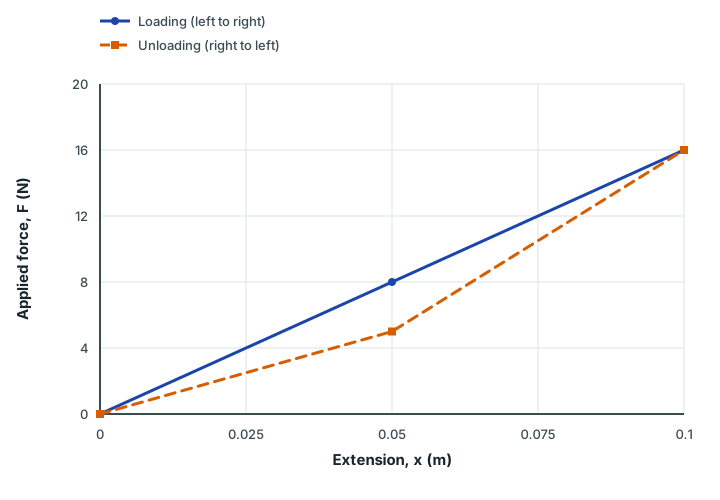
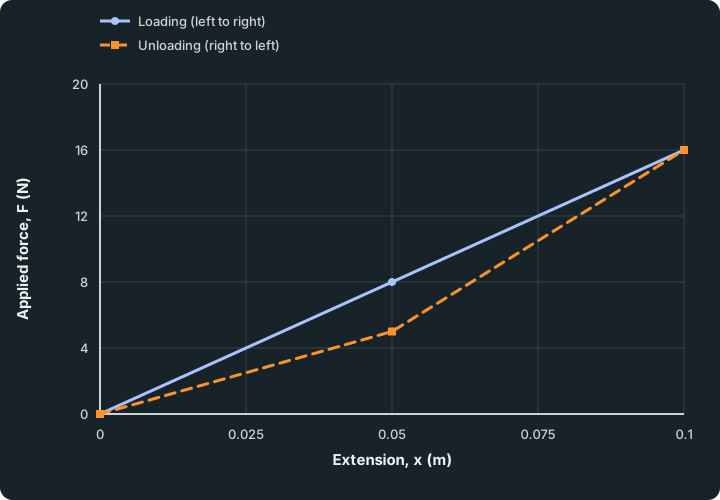
Some materials, such as rubber, return to their original length but follow a lower curve as they are unloaded. They give back less work than was put in.
Different loading and unloading paths
Loading follows force values 0, 8 and 16 N at extensions 0, 0.05 and 0.10 m. Unloading follows 16, 5 and 0 N as extension decreases through the same positions. The unloading path lies below the loading path between their endpoints.
Scroll across the figure to read all labels.
View figure data
| Extension, x (m) | Loading (left to right) | Unloading (right to left) |
|---|---|---|
| 0.00 | 0 | 0 |
| 0.05 | 8 | 5 |
| 0.10 | 16 | 16 |
The area under the loading curve is 0.80 J and the area under the unloading curve is 0.65 J. Find the energy dissipated in one complete cycle.
Show answer
The difference, 0.80-0.65 = 0.15 J, is the area between the curves. It becomes internal energy of the material, which is why a rubber band that is stretched and released many times gets warm. Original shape is restored, but not all the input work is recovered.
Common mistakes
- Using the length of the spring instead of its extension.
- Using (1/2)Fx for a graph that is not a straight line through the origin.
- Using (1/2)k(x₂-x₁)² for a spring that is already stretched.
- Assuming all the work done is stored when the material has passed its elastic limit.
Before you move on
Check your understanding 2
Without looking back: how do you find the elastic potential energy stored in a stretched material from its force–extension graph? Write the elastic potential energy of a spring of spring constant k at extension x. How does elastic potential energy differ from gravitational and electric potential energy?
Show answer
It is the area under the force–extension graph, provided deformation is elastic with negligible dissipation. Eₚ = (1/2)kx². Elastic potential energy is stored by deforming a body; gravitational and electric potential energy are stored by the positions of masses or charges in a field.
Spotted an error? Report a correction
Syllabus and review details
- GCE A-Level H2 Physics 2027 · 2027
Content Overview, PDF pages 9–10; Subject Content, PDF pages 11–30
Last reviewed: