Standing states in an infinite square well
Key idea: A particle in an infinite well has a wavefunction that vanishes at both walls. Only whole half-wavelengths fit, giving energies proportional to n²/L² and a nonzero ground-state energy.
Offline pages
Saved on this device only. Connect at least once every 30 days to confirm Premium. Sign-out or a change of account removes saved copies.
Loading guide controls…
Guided lessons · coming soon
Guided lesson
Guided steps
- Fit whole half-wavelengths between the walls.
- Explain why n cannot be zero.
- Connect wavelength and kinetic energy to the allowed levels.
- Follow the ground energy and higher-state scaling.
- Find the ground energy in a wider well.
- Find the third-state energy and the emitted photon energy.
- Apply the mass and width changes together.
On this page
You stopped at:
ContinueA guitar string fixed at both ends can only vibrate at certain frequencies, because a whole number of half-wavelengths must fit between its ends. A particle trapped in a box behaves the same way. Its wavefunction can only take certain shapes, so the particle can only have certain energies. This is the simplest example of quantised energy.
Standing waves in a well
In a one-dimensional infinite square well, a particle can move freely between two walls a distance L apart, but the walls are infinitely high, so it can never be found outside. The wavefunction must therefore be zero at both walls.
Waves reflected back and forth between the walls superpose to form standing waves. To have a node at each wall, a whole number of half-wavelengths must fit into the well:
The allowed wavefunctions are standing waves:
inside the well, and zero outside. State n has n half-waves, so it has n-1 nodes between the walls, where the probability density is zero.
The first three infinite-well states
Normalised amplitudes sqrt(L) ψₙ = sqrt(2) sin(n pi x/L) for n = 1, 2 and 3, on the same position scale. Each has unit integrated probability.
Scroll across the figure to read all labels.
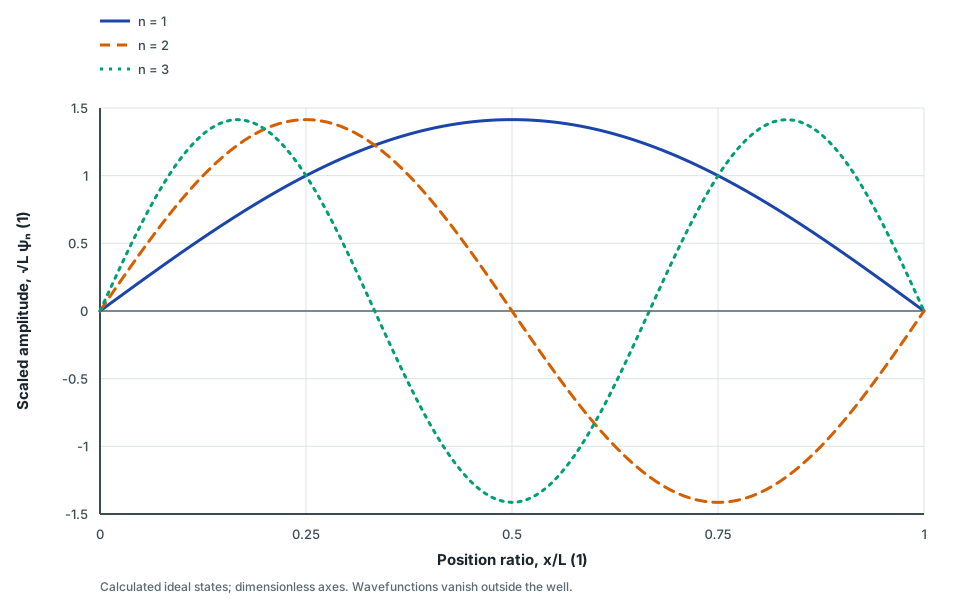
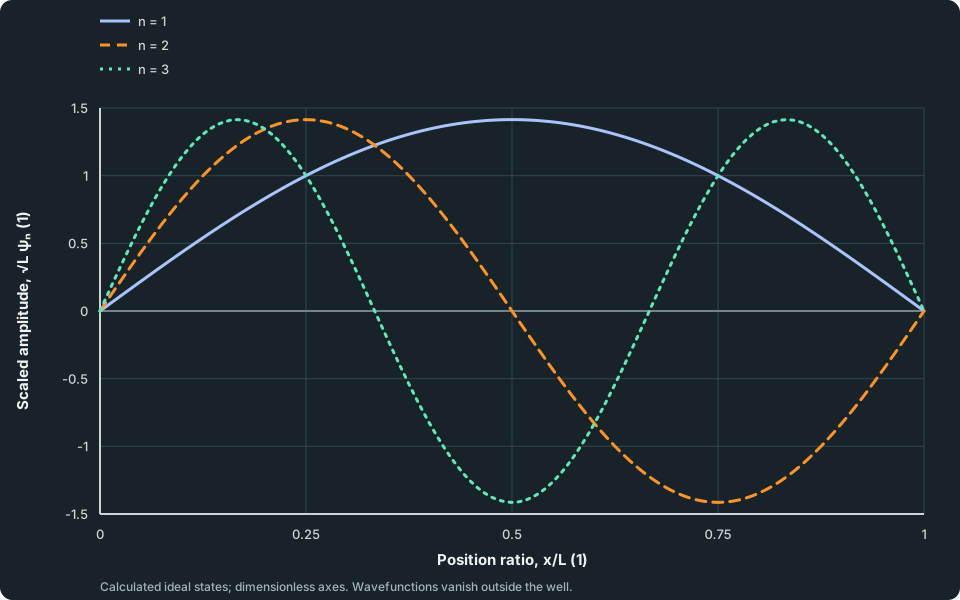
View figure data
| Position ratio, x/L (1) | n = 1 | n = 2 | n = 3 |
|---|---|---|---|
| 0.000000 | 0.00000 | 0.00000 | 0.0000 |
| 0.008333 | 0.03702 | 0.07401 | 0.1110 |
| 0.016667 | 0.07401 | 0.14783 | 0.2212 |
| 0.025000 | 0.11096 | 0.22123 | 0.3301 |
| 0.033333 | 0.14783 | 0.29403 | 0.4370 |
| 0.041667 | 0.18459 | 0.36603 | 0.5412 |
| 0.050000 | 0.22123 | 0.43702 | 0.6420 |
| 0.058333 | 0.25772 | 0.50681 | 0.7389 |
| 0.066667 | 0.29403 | 0.57521 | 0.8313 |
| 0.075000 | 0.33014 | 0.64204 | 0.9185 |
| 0.083333 | 0.36603 | 0.70711 | 1.0000 |
| 0.091667 | 0.40166 | 0.77024 | 1.0754 |
| 0.100000 | 0.43702 | 0.83125 | 1.1441 |
| 0.108333 | 0.47207 | 0.88999 | 1.2058 |
| 0.116667 | 0.50681 | 0.94629 | 1.2601 |
| 0.125000 | 0.54120 | 1.00000 | 1.3066 |
| 0.133333 | 0.57521 | 1.05097 | 1.3450 |
| 0.141667 | 0.60883 | 1.09905 | 1.3751 |
| 0.150000 | 0.64204 | 1.14412 | 1.3968 |
| 0.158333 | 0.67480 | 1.18606 | 1.4099 |
| 0.166667 | 0.70711 | 1.22474 | 1.4142 |
| 0.175000 | 0.73892 | 1.26007 | 1.4099 |
| 0.183333 | 0.77024 | 1.29195 | 1.3968 |
| 0.191667 | 0.80102 | 1.32028 | 1.3751 |
| 0.200000 | 0.83125 | 1.34500 | 1.3450 |
| 0.208333 | 0.86092 | 1.36603 | 1.3066 |
| 0.216667 | 0.88999 | 1.38331 | 1.2601 |
| 0.225000 | 0.91846 | 1.39680 | 1.2058 |
| 0.233333 | 0.94629 | 1.40647 | 1.1441 |
| 0.241667 | 0.97348 | 1.41228 | 1.0754 |
| 0.250000 | 1.00000 | 1.41421 | 1.0000 |
| 0.258333 | 1.02583 | 1.41228 | 0.9185 |
| 0.266667 | 1.05097 | 1.40647 | 0.8313 |
| 0.275000 | 1.07538 | 1.39680 | 0.7389 |
| 0.283333 | 1.09905 | 1.38331 | 0.6420 |
| 0.291667 | 1.12197 | 1.36603 | 0.5412 |
| 0.300000 | 1.14412 | 1.34500 | 0.4370 |
| 0.308333 | 1.16549 | 1.32028 | 0.3301 |
| 0.316667 | 1.18606 | 1.29195 | 0.2212 |
| 0.325000 | 1.20582 | 1.26007 | 0.1110 |
| 0.333333 | 1.22474 | 1.22474 | 0.0000 |
| 0.341667 | 1.24284 | 1.18606 | -0.1110 |
| 0.350000 | 1.26007 | 1.14412 | -0.2212 |
| 0.358333 | 1.27645 | 1.09905 | -0.3301 |
| 0.366667 | 1.29195 | 1.05097 | -0.4370 |
| 0.375000 | 1.30656 | 1.00000 | -0.5412 |
| 0.383333 | 1.32028 | 0.94629 | -0.6420 |
| 0.391667 | 1.33310 | 0.88999 | -0.7389 |
| 0.400000 | 1.34500 | 0.83125 | -0.8313 |
| 0.408333 | 1.35598 | 0.77024 | -0.9185 |
| 0.416667 | 1.36603 | 0.70711 | -1.0000 |
| 0.425000 | 1.37514 | 0.64204 | -1.0754 |
| 0.433333 | 1.38331 | 0.57521 | -1.1441 |
| 0.441667 | 1.39053 | 0.50681 | -1.2058 |
| 0.450000 | 1.39680 | 0.43702 | -1.2601 |
| 0.458333 | 1.40211 | 0.36603 | -1.3066 |
| 0.466667 | 1.40647 | 0.29403 | -1.3450 |
| 0.475000 | 1.40985 | 0.22123 | -1.3751 |
| 0.483333 | 1.41228 | 0.14783 | -1.3968 |
| 0.491667 | 1.41373 | 0.07401 | -1.4099 |
| 0.500000 | 1.41421 | 0.00000 | -1.4142 |
| 0.508333 | 1.41373 | -0.07401 | -1.4099 |
| 0.516667 | 1.41228 | -0.14783 | -1.3968 |
| 0.525000 | 1.40985 | -0.22123 | -1.3751 |
| 0.533333 | 1.40647 | -0.29403 | -1.3450 |
| 0.541667 | 1.40211 | -0.36603 | -1.3066 |
| 0.550000 | 1.39680 | -0.43702 | -1.2601 |
| 0.558333 | 1.39053 | -0.50681 | -1.2058 |
| 0.566667 | 1.38331 | -0.57521 | -1.1441 |
| 0.575000 | 1.37514 | -0.64204 | -1.0754 |
| 0.583333 | 1.36603 | -0.70711 | -1.0000 |
| 0.591667 | 1.35598 | -0.77024 | -0.9185 |
| 0.600000 | 1.34500 | -0.83125 | -0.8313 |
| 0.608333 | 1.33310 | -0.88999 | -0.7389 |
| 0.616667 | 1.32028 | -0.94629 | -0.6420 |
| 0.625000 | 1.30656 | -1.00000 | -0.5412 |
| 0.633333 | 1.29195 | -1.05097 | -0.4370 |
| 0.641667 | 1.27645 | -1.09905 | -0.3301 |
| 0.650000 | 1.26007 | -1.14412 | -0.2212 |
| 0.658333 | 1.24284 | -1.18606 | -0.1110 |
| 0.666667 | 1.22474 | -1.22474 | 0.0000 |
| 0.675000 | 1.20582 | -1.26007 | 0.1110 |
| 0.683333 | 1.18606 | -1.29195 | 0.2212 |
| 0.691667 | 1.16549 | -1.32028 | 0.3301 |
| 0.700000 | 1.14412 | -1.34500 | 0.4370 |
| 0.708333 | 1.12197 | -1.36603 | 0.5412 |
| 0.716667 | 1.09905 | -1.38331 | 0.6420 |
| 0.725000 | 1.07538 | -1.39680 | 0.7389 |
| 0.733333 | 1.05097 | -1.40647 | 0.8313 |
| 0.741667 | 1.02583 | -1.41228 | 0.9185 |
| 0.750000 | 1.00000 | -1.41421 | 1.0000 |
| 0.758333 | 0.97348 | -1.41228 | 1.0754 |
| 0.766667 | 0.94629 | -1.40647 | 1.1441 |
| 0.775000 | 0.91846 | -1.39680 | 1.2058 |
| 0.783333 | 0.88999 | -1.38331 | 1.2601 |
| 0.791667 | 0.86092 | -1.36603 | 1.3066 |
| 0.800000 | 0.83125 | -1.34500 | 1.3450 |
| 0.808333 | 0.80102 | -1.32028 | 1.3751 |
| 0.816667 | 0.77024 | -1.29195 | 1.3968 |
| 0.825000 | 0.73892 | -1.26007 | 1.4099 |
| 0.833333 | 0.70711 | -1.22474 | 1.4142 |
| 0.841667 | 0.67480 | -1.18606 | 1.4099 |
| 0.850000 | 0.64204 | -1.14412 | 1.3968 |
| 0.858333 | 0.60883 | -1.09905 | 1.3751 |
| 0.866667 | 0.57521 | -1.05097 | 1.3450 |
| 0.875000 | 0.54120 | -1.00000 | 1.3066 |
| 0.883333 | 0.50681 | -0.94629 | 1.2601 |
| 0.891667 | 0.47207 | -0.88999 | 1.2058 |
| 0.900000 | 0.43702 | -0.83125 | 1.1441 |
| 0.908333 | 0.40166 | -0.77024 | 1.0754 |
| 0.916667 | 0.36603 | -0.70711 | 1.0000 |
| 0.925000 | 0.33014 | -0.64204 | 0.9185 |
| 0.933333 | 0.29403 | -0.57521 | 0.8313 |
| 0.941667 | 0.25772 | -0.50681 | 0.7389 |
| 0.950000 | 0.22123 | -0.43702 | 0.6420 |
| 0.958333 | 0.18459 | -0.36603 | 0.5412 |
| 0.966667 | 0.14783 | -0.29403 | 0.4370 |
| 0.975000 | 0.11096 | -0.22123 | 0.3301 |
| 0.983333 | 0.07401 | -0.14783 | 0.2212 |
| 0.991667 | 0.03702 | -0.07401 | 0.1110 |
| 1.000000 | 0.00000 | 0.00000 | 0.0000 |
Check your understanding 1 Why not n = 0?
Why is there no state with n = 0?
Show answer
With n = 0, sin((0 × π x)/L) = 0 everywhere, so the wavefunction is zero everywhere and the total probability would be zero instead of one. A particle in the well must have n ≥ 1. Compare your explanation for the boundary condition and the total probability: satisfying the wall nodes alone is not enough.
Allowed energies
The standing wave combines travelling components with momenta + pₙ and -pₙ, where pₙ = h/λₙ = nh/2L. The state has zero mean momentum, rather than one definite momentum pₙ. Both components have the same kinetic energy pₙ²/(2m). Taking potential energy as zero inside the well gives
Only these energies are possible: the energy is quantised. The lowest, the ground state E₁, is not zero, so a trapped particle can never be completely at rest, as the uncertainty principle requires.
The energies are in the ratio 1:4:9:16:…, so the levels get further apart as n increases. A narrower well or a lighter particle gives larger energies: halving L makes every energy four times as large.
Energy levels in a 1D infinite well (scaled)
Discrete stationary energy ratios Eₙ/E₁ = n² for integer n from 1 to 5: 1, 4, 9, 16 and 25.
Scroll across the figure to read all labels.
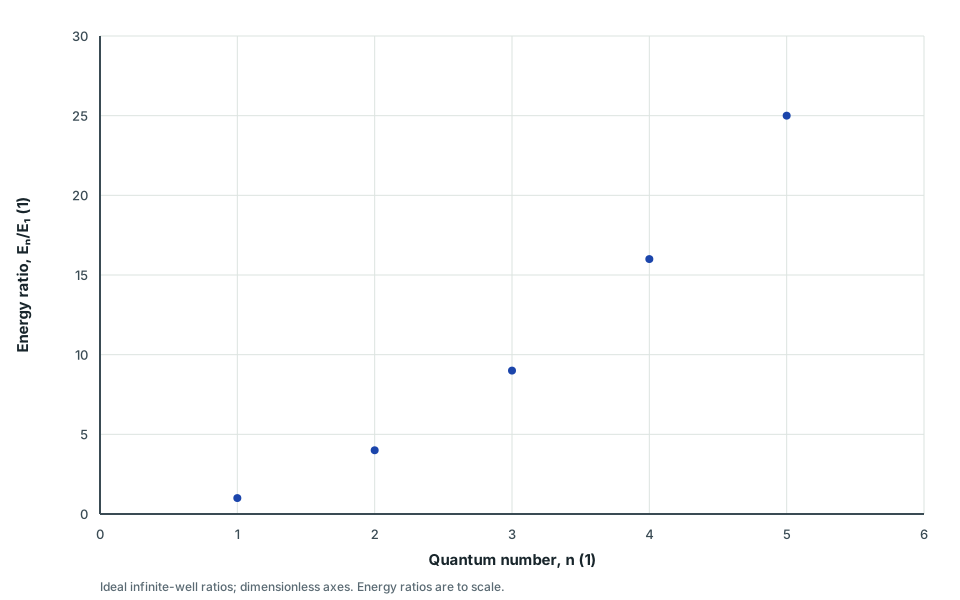
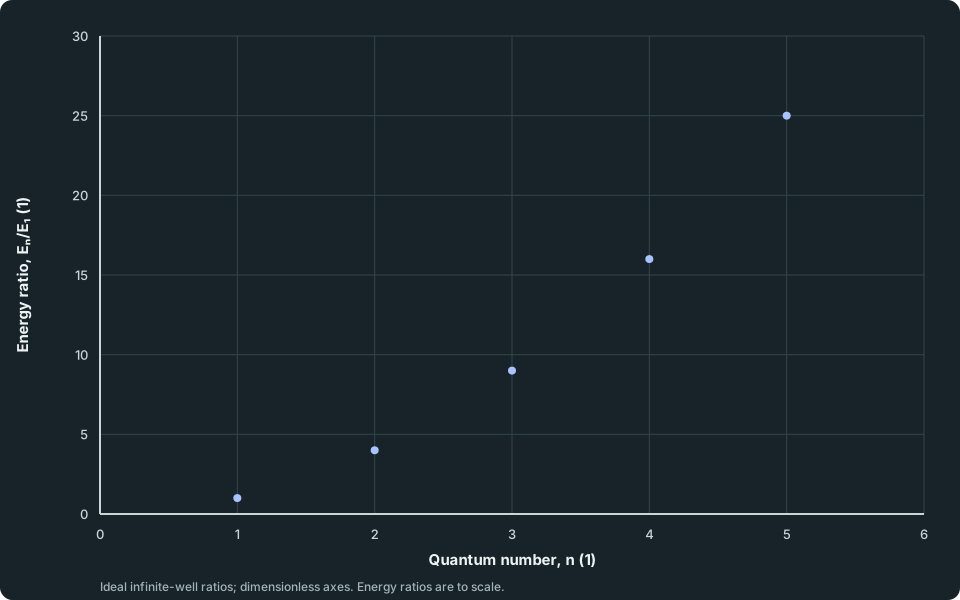
View figure data
| Quantum number, n (1) | Eₙ/E₁ = n² |
|---|---|
| 1 | 1 |
| 2 | 4 |
| 3 | 9 |
| 4 | 16 |
| 5 | 25 |
Worked example 1
An electron in a 1.00 nm well
Problem
An electron is trapped in an infinite square well 1.00 nm wide. Find the energies of its first three states, in electronvolts. The mass of an electron is 9.11 × 10⁻³¹ kg.
Show full solution
Ground state
Method
Substitute n = 1 into Eₙ = n²h²/8mL², with L in metres.Reason
The ground-state energy sets the scale for every other level.Working
Answer
E₁ = ((6.63 × 10⁻³⁴)²)/(8(9.11 × 10⁻³¹)(1.00 × 10⁻⁹)²) = 6.03 × 10⁻²⁰ J = 0.377 eV
Higher states
Working
Answer
Eₙ = n²E₁: E₂ = 4E₁ = 1.51 eV and E₃ = 9E₁ = 3.39 eV
Quick check
The gaps, 1.13 eV and 1.88 eV, grow with n, as expected.
Guided practice 2
A wider well
Problem
The electron is now trapped in a well 2.00 nm wide. Using the worked example, find its new ground-state energy.
Find E₁
Hints
Hint 1
only L changes
The mass and n are unchanged, and E₁ ∝ 1/L².
Show full solution
Scaling
Working
Answer
Doubling L divides E₁ by 4: 0.377/4 = 0.0942 eV
Try it yourself 3
From the ground state up
Problem
A particle in an infinite square well has a ground-state energy of 0.20 eV. Find the energy of its n = 3 state, and the energy of the photon it would emit in dropping from n = 3 to n = 2.
Find the energies
Show the steps Optional working
Hints
Hint 1
scaling
Use Eₙ = n²E₁. The photon carries away the difference between the two levels.
Show solution step by step
Energy of n = 3
Reason
The energies scale as n².Working
Answer
E₃ = 9(0.20) = 1.8 eV and E₂ = 4(0.20) = 0.80 eV
Photon
Working
Answer
E₃-E₂ = 1.8-0.80 = 1.0 eV
Check your understanding 2 Two wells
Well A traps a particle of mass m and has width L. Well B traps a particle of mass 2m and has width L/2. How do their ground-state energies compare? How many nodes between the walls does the n = 2 state have in each?
Show answer
EB/EA = m/2m × (L/(L/2))² = 1/2 × 4 = 2, so well B’s ground state has twice the energy. Both n = 2 states have one node between the walls, halfway across: the mass and width set the energies, and n sets the shape.
Common mistakes
- Including a state with n = 0, or saying the ground-state energy is zero.
- Thinking the energy levels are equally spaced; they go as n².
- Leaving L in nanometres, or forgetting to square it, in Eₙ = n²h²/8mL².
- Reading a negative part of ψ as a negative probability; the probability density is |ψ|².
Spotted an error? Report a correction
Syllabus and review details
- GCE A-Level H2 Physics 2027 · 2027
Content Overview, PDF pages 9–10; Subject Content, PDF pages 11–30
Last reviewed: