Wave quantities, graphs and speed
Key idea: Wave speed equals frequency multiplied by wavelength. Wavelength is read from a graph of displacement against distance, and the period from a graph of displacement against time.
Offline pages
Saved on this device only. Connect at least once every 30 days to confirm Premium. Sign-out or a change of account removes saved copies.
Loading guide controls…
Guided lessons · coming soon
Guided lesson
Guided steps
- Compare amplitude, wavelength and wavefront motion.
- Follow waves per second and seconds per wave in opposite divisions.
- Calculate the period from the frequency.
- Read whether the graph records many positions at one time or one position at many times.
- Follow the vertical amplitude and neighbouring spatial crests.
- Follow neighbouring time peaks and the reciprocal frequency.
- Read wavelength and period from the two graphs, then calculate frequency and speed.
- Use the crossing direction as well as zero displacement to identify a full cycle.
- Follow the rearrangement and compare units with the requested wavelength.
- Calculate the sound wave’s speed.
- Convert the wavelength to metres and calculate the frequency.
- Read wavelength and use the given frequency to find speed.
- Use the unchanged speed to explain the wavelength change.
- Calculate the wave speed, then find the period and wavelength after the frequency doubles.
On this page
You stopped at:
ContinueFive quantities describe any wave: how big its vibrations are, how long each repeat is, how often it repeats, how long one repeat takes and how fast it travels. You can read them from two kinds of wave graph, and three of them are linked by the most useful equation in the topic, v = fλ.
Five wave quantities
| Quantity | Meaning | SI unit |
|---|---|---|
| Amplitude, A | the maximum displacement of a point from its rest (equilibrium) position | metre (m) |
| Wavelength, λ | the shortest distance between two points at the same stage of vibration, such as two neighbouring crests or two neighbouring compressions | metre (m) |
| Frequency, f | the number of complete waves produced each second, equal to the frequency of the source | hertz (Hz) |
| Period, T | the time taken to produce one complete wave | second (s) |
| Wave speed, v | the distance travelled by a wavefront each second | metre per second (m/s) |
Two quantities are often confused:
- Amplitude is measured from the rest position to a crest, not from a crest to a trough. The crest-to-trough height is twice the amplitude.
- Wave speed is how fast the crests move along. It is not how fast a point of the medium moves as it vibrates.
Frequency counts waves per second, while period is seconds per wave, so each is the reciprocal of the other:
Worked example 1
Waves per second and seconds per wave
Problem
A source makes 20 complete vibrations in 5.0 s at a steady rate. Find its frequency and period.
Show full solution
Count vibrations per second
Method
Divide the number of vibrations by the time.Reason
Frequency is the number of vibrations each second.Working
Answer
f = 20/(5.0 s) = 4.0 HzFind the time for one vibration
Method
Divide the time by the number of vibrations.Reason
The rate is steady, so each vibration takes the same time.Working
Answer
T = (5.0 s)/20 = 0.25 sState both quantities
Working
Answer
The frequency is 4.0 Hz and the period is 0.25 s. Check: 1/4.0 = 0.25.
Quick check
Spot the mistake 2
Is the period the same number as the frequency?
Learner response
A source vibrates at 50 Hz. A student says its period is 50 s. Calculate the correct period.
Diagnose, then calculate
Show full solution
Use the reciprocal
Method
Divide 1 by the frequency.Reason
50 waves each second means each wave takes one fiftieth of a second.
Working
Answer
T = 1/f = 1/(50 Hz) = 0.020 s
Common mistake
Reading wave graphs
Two kinds of graph look alike but answer different questions. Always read the horizontal axis first.
- A displacement–distance graph is a snapshot of the whole wave at one instant, like a photograph. Its horizontal axis is distance, so the repeat along it is the wavelength.
- A displacement–time graph follows one point of the medium as time passes. Its horizontal axis is time, so the repeat along it is the period.
On both, the amplitude is read on the vertical axis, from zero to a crest.
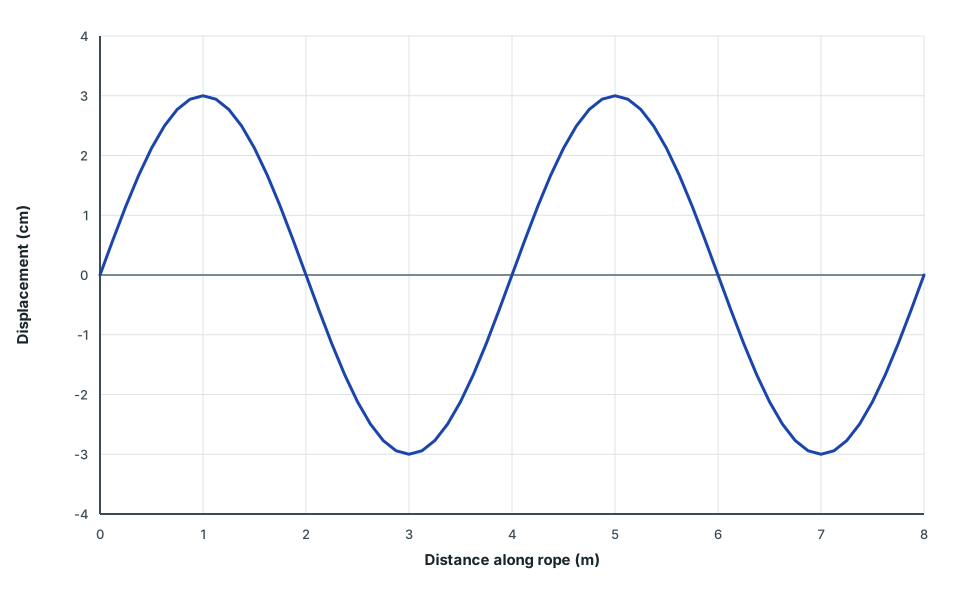
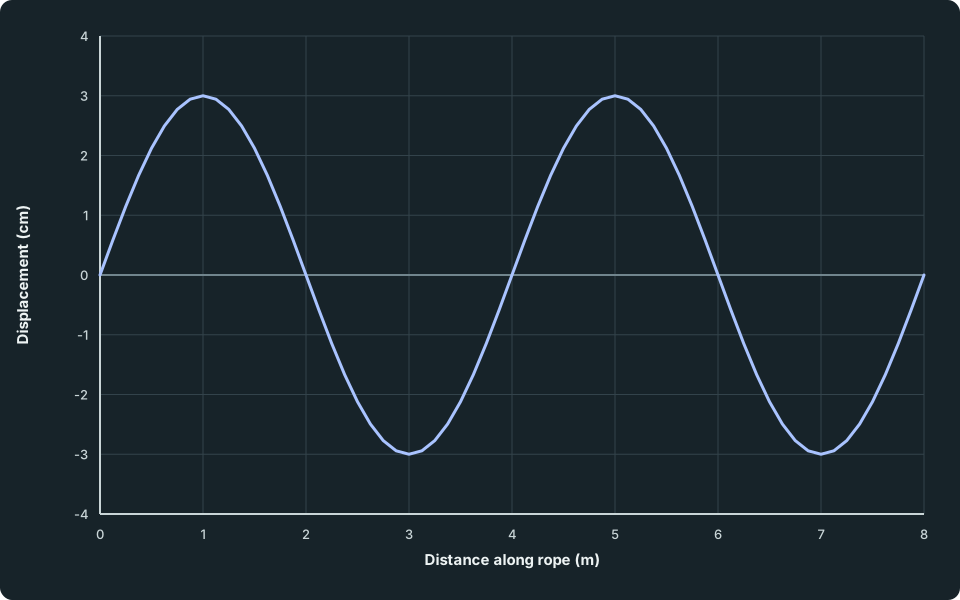
Rope displacement at one instant
Displacement in cm against distance along the rope in m, from 0 m to 8 m, at one instant. The rope has a smooth repeating shape between +3 cm and −3 cm: crests at 1 m and 5 m, troughs at 3 m and 7 m, and zero displacement at 0, 2, 4, 6 and 8 m. The wave travels towards increasing distance.
Scroll across the figure to read all labels.
View figure data
| Distance along rope (m) | Rope |
|---|---|
| 0.000 | 0.000000 |
| 0.125 | 0.585271 |
| 0.250 | 1.148050 |
| 0.375 | 1.666711 |
| 0.500 | 2.121320 |
| 0.625 | 2.494409 |
| 0.750 | 2.771639 |
| 0.875 | 2.942356 |
| 1.000 | 3.000000 |
| 1.125 | 2.942356 |
| 1.250 | 2.771639 |
| 1.375 | 2.494409 |
| 1.500 | 2.121320 |
| 1.625 | 1.666711 |
| 1.750 | 1.148050 |
| 1.875 | 0.585271 |
| 2.000 | 0.000000 |
| 2.125 | -0.585271 |
| 2.250 | -1.148050 |
| 2.375 | -1.666711 |
| 2.500 | -2.121320 |
| 2.625 | -2.494409 |
| 2.750 | -2.771639 |
| 2.875 | -2.942356 |
| 3.000 | -3.000000 |
| 3.125 | -2.942356 |
| 3.250 | -2.771639 |
| 3.375 | -2.494409 |
| 3.500 | -2.121320 |
| 3.625 | -1.666711 |
| 3.750 | -1.148050 |
| 3.875 | -0.585271 |
| 4.000 | 0.000000 |
| 4.125 | 0.585271 |
| 4.250 | 1.148050 |
| 4.375 | 1.666711 |
| 4.500 | 2.121320 |
| 4.625 | 2.494409 |
| 4.750 | 2.771639 |
| 4.875 | 2.942356 |
| 5.000 | 3.000000 |
| 5.125 | 2.942356 |
| 5.250 | 2.771639 |
| 5.375 | 2.494409 |
| 5.500 | 2.121320 |
| 5.625 | 1.666711 |
| 5.750 | 1.148050 |
| 5.875 | 0.585271 |
| 6.000 | 0.000000 |
| 6.125 | -0.585271 |
| 6.250 | -1.148050 |
| 6.375 | -1.666711 |
| 6.500 | -2.121320 |
| 6.625 | -2.494409 |
| 6.750 | -2.771639 |
| 6.875 | -2.942356 |
| 7.000 | -3.000000 |
| 7.125 | -2.942356 |
| 7.250 | -2.771639 |
| 7.375 | -2.494409 |
| 7.500 | -2.121320 |
| 7.625 | -1.666711 |
| 7.750 | -1.148050 |
| 7.875 | -0.585271 |
| 8.000 | 0.000000 |
Worked example 3
Reading a snapshot of a rope
Problem
The displacement–distance graph above shows a rope at one instant. Its highest displacement is + 3 cm, and neighbouring crests are at 1 m and 5 m. Find the amplitude and the wavelength.
Show full solution
Read the amplitude
Method
Measure from the rest position, zero, up to a crest.
Reason
Amplitude is the maximum displacement from rest, not the crest-to-trough height.
Working
Answer
A = 3 cmRead the wavelength
Method
Subtract the positions of two neighbouring crests.
Reason
Neighbouring crests are one wavelength apart. A crest and the next trough are only half a wavelength apart.
Working
Answer
λ = 5 m-1 m = 4 mState the readings
Working
Answer
The amplitude is 3 cm and the wavelength is 4 m.
Quick check
A snapshot shows distance, not time, so it cannot tell you the period or frequency.
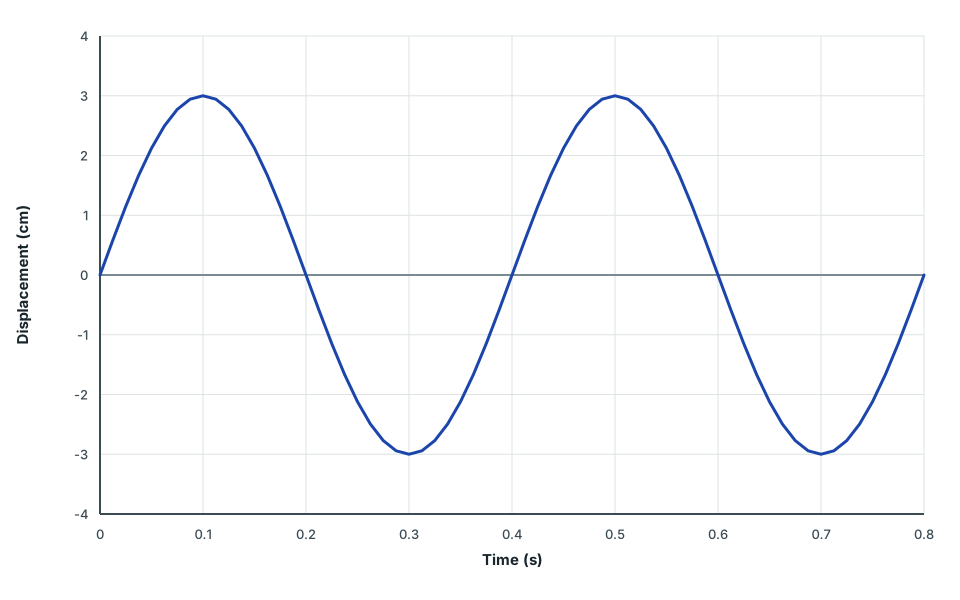
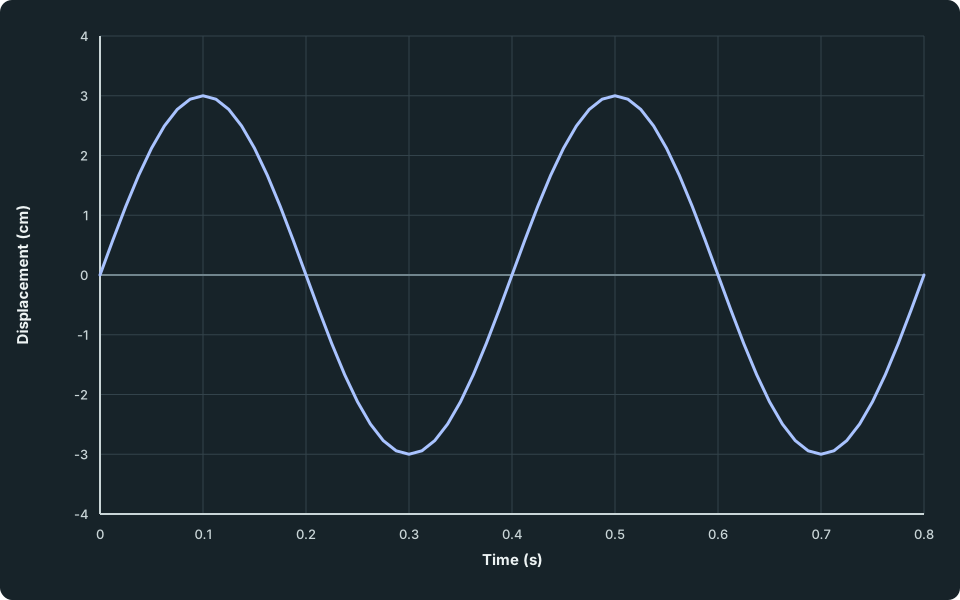
Displacement of the rope point 2.0 m along
Displacement in cm against time in s, from 0 s to 0.8 s, for the point 2.0 m along the same rope. The point starts at zero displacement moving up, reaches +3 cm at 0.10 s and 0.50 s, −3 cm at 0.30 s and 0.70 s, and passes through zero at 0, 0.20, 0.40, 0.60 and 0.80 s.
Scroll across the figure to read all labels.
View figure data
| Time (s) | Marked point |
|---|---|
| 0.0000 | 0.000000 |
| 0.0125 | 0.585271 |
| 0.0250 | 1.148050 |
| 0.0375 | 1.666711 |
| 0.0500 | 2.121320 |
| 0.0625 | 2.494409 |
| 0.0750 | 2.771639 |
| 0.0875 | 2.942356 |
| 0.1000 | 3.000000 |
| 0.1125 | 2.942356 |
| 0.1250 | 2.771639 |
| 0.1375 | 2.494409 |
| 0.1500 | 2.121320 |
| 0.1625 | 1.666711 |
| 0.1750 | 1.148050 |
| 0.1875 | 0.585271 |
| 0.2000 | 0.000000 |
| 0.2125 | -0.585271 |
| 0.2250 | -1.148050 |
| 0.2375 | -1.666711 |
| 0.2500 | -2.121320 |
| 0.2625 | -2.494409 |
| 0.2750 | -2.771639 |
| 0.2875 | -2.942356 |
| 0.3000 | -3.000000 |
| 0.3125 | -2.942356 |
| 0.3250 | -2.771639 |
| 0.3375 | -2.494409 |
| 0.3500 | -2.121320 |
| 0.3625 | -1.666711 |
| 0.3750 | -1.148050 |
| 0.3875 | -0.585271 |
| 0.4000 | 0.000000 |
| 0.4125 | 0.585271 |
| 0.4250 | 1.148050 |
| 0.4375 | 1.666711 |
| 0.4500 | 2.121320 |
| 0.4625 | 2.494409 |
| 0.4750 | 2.771639 |
| 0.4875 | 2.942356 |
| 0.5000 | 3.000000 |
| 0.5125 | 2.942356 |
| 0.5250 | 2.771639 |
| 0.5375 | 2.494409 |
| 0.5500 | 2.121320 |
| 0.5625 | 1.666711 |
| 0.5750 | 1.148050 |
| 0.5875 | 0.585271 |
| 0.6000 | 0.000000 |
| 0.6125 | -0.585271 |
| 0.6250 | -1.148050 |
| 0.6375 | -1.666711 |
| 0.6500 | -2.121320 |
| 0.6625 | -2.494409 |
| 0.6750 | -2.771639 |
| 0.6875 | -2.942356 |
| 0.7000 | -3.000000 |
| 0.7125 | -2.942356 |
| 0.7250 | -2.771639 |
| 0.7375 | -2.494409 |
| 0.7500 | -2.121320 |
| 0.7625 | -1.666711 |
| 0.7750 | -1.148050 |
| 0.7875 | -0.585271 |
| 0.8000 | 0.000000 |
Worked example 4
Following one point through time
Problem
The displacement–time graph above follows one point 2.0 m along the same rope. Its displacement is greatest at 0.10 s and again at 0.50 s. Find the period and the frequency.
Show full solution
Measure one complete vibration
Method
Subtract the times of two neighbouring peaks.Reason
Between them, the point has made exactly one complete vibration. The horizontal axis is now time.Working
Answer
T = 0.50 s-0.10 s = 0.40 sConvert to frequency
Method
Take the reciprocal of the period.Reason
Frequency is the number of vibrations each second.Working
Answer
f = 1/(0.40 s) = 2.5 HzState the readings
Working
Answer
The period is 0.40 s and the frequency is 2.5 Hz.
Quick check
Check your understanding 1 Read the two wave graphs
Use the two rope graphs above. Read their wavelength and period, then calculate frequency and wave speed.
Show the steps Optional working
Show the steps Optional working
Show answer
Both graphs show displacement in cm vertically. The snapshot has distance in m horizontally; the trace has time in s. Amplitude is 3 cm on both, from equilibrium to a crest.
Neighbouring spatial crests at 1 and 5 m give wavelength 4 m. Time peaks at 0.10 and 0.50 s give period 0.40 s, so frequency is 2.5 Hz and wave speed is 2.5 × 4 = 10 m/s. Show these intervals on their own axes. A snapshot has no elapsed time, while one point’s time trace gives no spatial spacing; the speed calculation uses both graphs’ stated same-wave relationship.
A spatial gradient is local slope of the rope, with displacement per distance, not distance travelled per time. Even a time-graph gradient describes local vibration velocity rather than wave propagation speed. At a crest, local vertical velocity can be zero while the travelling wave still propagates.
Check your understanding 2 Two zero crossings
On the displacement–time graph above, the point passes through zero displacement at 0 s and again at 0.20 s. Is the time between them one period?
Show answer
No. At 0 s the point is moving up through zero; at 0.20 s it is moving down through zero. That is only half a vibration, so 0.20 s is half a period. One full period runs between two crossings in the same direction, for example from 0 s to 0.40 s.
Wave speed: v = fλ
In one period, a source sends out one complete wave, and the front of the wave moves forward by one wavelength. So the wave travels a distance λ in a time T:
Since 1/T = f, this becomes the wave equation:
Use metres, seconds and hertz: convert centimetres to metres and kilohertz to hertz before substituting. For waves travelling at a fixed speed, a higher frequency gives a shorter wavelength: more waves are squeezed into each second of travel.
Worked example 5
Finding a wavelength
Problem
Show full solution
Rearrange the wave equation
Method
Make the wavelength the subject of v = fλ.Reason
Divide both sides by f.Working
Answer
λ = v/fSubstitute
Method
Divide the speed by the frequency.Reason
Metres per second divided by waves per second leaves metres per wave.Working
Answer
λ = (3.0 m s⁻¹)/(2.0 Hz) = 1.5 m
Quick check
Guided practice 6
Finding the speed of a sound wave
Problem
A sound wave has a frequency of 250 Hz and a wavelength of 1.4 m. Find its speed.
Choose the equation, then calculate
Hints
Hint 1
choose the equation
You know f and λ and want v.
Hint 2
check the units
Hertz times metres gives metres per second, so no conversion is needed.
Show full solution
Apply the wave equation
Method
Multiply the frequency by the wavelength.Reason
250 waves pass each second, and each is 1.4 m long.Working
Answer
v = fλ = 250 Hz × 1.4 m = 350 m s⁻¹
Quick check
Exam-style question 1
Frequency of a water wave
Examination question
Write your answer before viewing the mark scheme
Show the steps Optional working
Show solution step by step
Convert the wavelength
1 markMethod
Convert centimetres to metres.Reason
The speed is in metres per second.Working
Answer
4.0 cm = 0.040 mCalculate the frequency
3 marksMethod
Rearrange v = fλ and divide the speed by the wavelength.Reason
That gives the number of waves passing each second.Working
Answer
f = v/λ = (0.80 m s⁻¹)/(0.040 m) = 20 Hz
Self-mark with the mark scheme
Tick each mark point that your answer includes.
Self-mark each point separately.
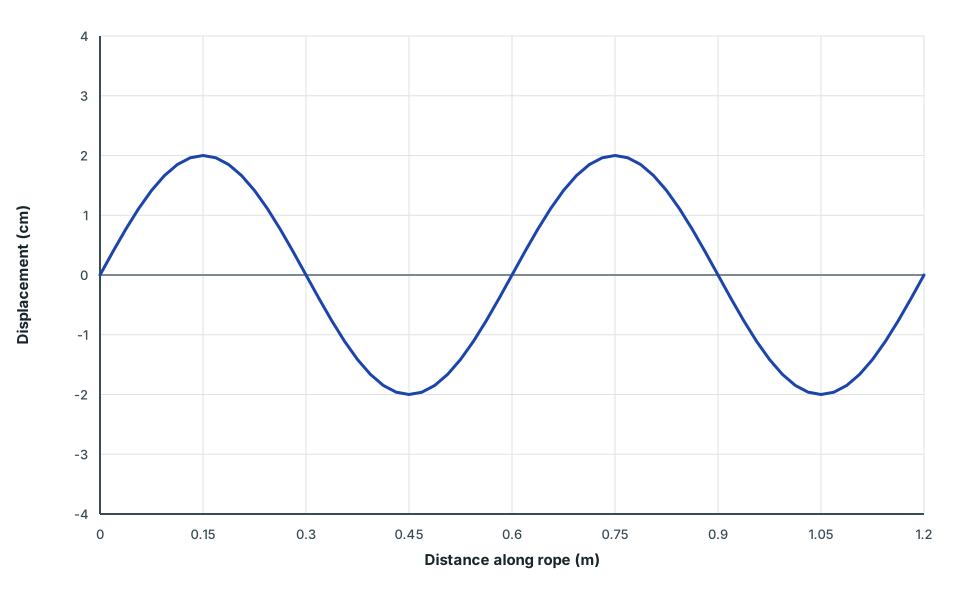
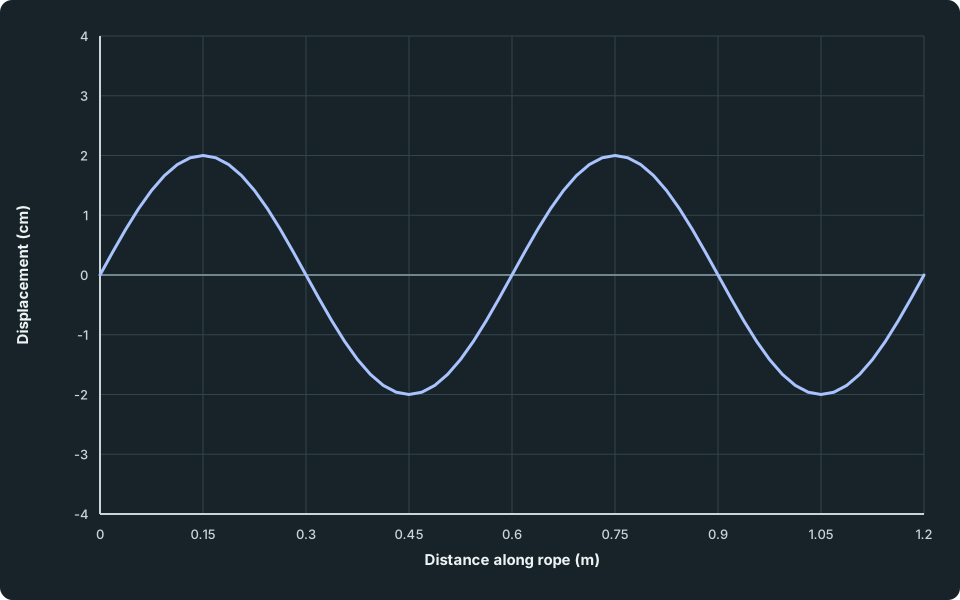
Another rope at one instant
Displacement in cm against distance along the rope in m, from 0 m to 1.2 m, at one instant. The rope has a smooth repeating shape between +2 cm and −2 cm: crests at 0.15 m and 0.75 m, troughs at 0.45 m and 1.05 m, and zero displacement at 0, 0.30, 0.60, 0.90 and 1.20 m.
Scroll across the figure to read all labels.
View figure data
| Distance along rope (m) | Rope |
|---|---|
| 0.00000 | 0.000000 |
| 0.01875 | 0.390181 |
| 0.03750 | 0.765367 |
| 0.05625 | 1.111140 |
| 0.07500 | 1.414214 |
| 0.09375 | 1.662939 |
| 0.11250 | 1.847759 |
| 0.13125 | 1.961571 |
| 0.15000 | 2.000000 |
| 0.16875 | 1.961571 |
| 0.18750 | 1.847759 |
| 0.20625 | 1.662939 |
| 0.22500 | 1.414214 |
| 0.24375 | 1.111140 |
| 0.26250 | 0.765367 |
| 0.28125 | 0.390181 |
| 0.30000 | 0.000000 |
| 0.31875 | -0.390181 |
| 0.33750 | -0.765367 |
| 0.35625 | -1.111140 |
| 0.37500 | -1.414214 |
| 0.39375 | -1.662939 |
| 0.41250 | -1.847759 |
| 0.43125 | -1.961571 |
| 0.45000 | -2.000000 |
| 0.46875 | -1.961571 |
| 0.48750 | -1.847759 |
| 0.50625 | -1.662939 |
| 0.52500 | -1.414214 |
| 0.54375 | -1.111140 |
| 0.56250 | -0.765367 |
| 0.58125 | -0.390181 |
| 0.60000 | 0.000000 |
| 0.61875 | 0.390181 |
| 0.63750 | 0.765367 |
| 0.65625 | 1.111140 |
| 0.67500 | 1.414214 |
| 0.69375 | 1.662939 |
| 0.71250 | 1.847759 |
| 0.73125 | 1.961571 |
| 0.75000 | 2.000000 |
| 0.76875 | 1.961571 |
| 0.78750 | 1.847759 |
| 0.80625 | 1.662939 |
| 0.82500 | 1.414214 |
| 0.84375 | 1.111140 |
| 0.86250 | 0.765367 |
| 0.88125 | 0.390181 |
| 0.90000 | 0.000000 |
| 0.91875 | -0.390181 |
| 0.93750 | -0.765367 |
| 0.95625 | -1.111140 |
| 0.97500 | -1.414214 |
| 0.99375 | -1.662939 |
| 1.01250 | -1.847759 |
| 1.03125 | -1.961571 |
| 1.05000 | -2.000000 |
| 1.06875 | -1.961571 |
| 1.08750 | -1.847759 |
| 1.10625 | -1.662939 |
| 1.12500 | -1.414214 |
| 1.14375 | -1.111140 |
| 1.16250 | -0.765367 |
| 1.18125 | -0.390181 |
| 1.20000 | 0.000000 |
Check your understanding 3 Speed from a snapshot
The snapshot above shows a second rope. Its source vibrates at 5.0 Hz. Read the wavelength from the graph and find the wave speed.
Show the steps Optional working
Show answer
Neighbouring crests are at 0.15 m and 0.75 m, so λ = 0.60 m. Then
Use the horizontal spacing of the crests, not the amplitude, and take the frequency from the question: a snapshot cannot give it.
Check your understanding 4 Doubling the frequency
The frequency of a ripple-tank dipper is doubled, and the ripples are found to travel at the same speed as before. What happens to the wavelength? Explain.
Show answer
It halves. With v unchanged, λ = v/f, so doubling f halves λ. Twice as many waves are sent out each second over the same distance, so each one must be half as long.
Check your understanding 5 Change frequency at fixed speed
A rope wave has neighbouring crests at 0.20 and 0.80 m. At one fixed point, neighbouring peaks occur at 0.050 and 0.250 s. Calculate its speed. The frequency doubles while speed stays unchanged. Find the new period and wavelength.
Show the steps Optional working
Show answer
λ = 0.80-0.20 = 0.60 m and T = 0.250-0.050 = 0.200 s. Thus f = 1/T = 5.0 Hz and v = fλ = 3.0 m/s.
The new frequency is 10 Hz, so the new period is 0.100 s and the new wavelength is 3.0/10 = 0.30 m. Frequency does not determine amplitude; we would need new displacement information to find it.
Common mistakes
- Measuring amplitude from crest to trough instead of from the rest position.
- Measuring a wavelength from a crest to the next trough. That is half a wavelength.
- Reading a “wavelength” from a displacement–time graph. Its repeat is the period.
- Writing the period as the same number as the frequency. Use T = 1/f.
- Forgetting to convert centimetres to metres, or kilohertz to hertz, before using v = fλ.
- Saying a higher frequency makes a wave travel faster. At a fixed speed, it makes the wavelength shorter.
Spotted an error? Report a correction
Syllabus and review details
- SEC G3 Physics 2027 · 2027
Content Structure, PDF page 9; Subject Content, PDF pages 10–28