R.m.s. values and equal heating
Key idea: R.m.s. current gives the same mean heating power as steady D.C. in the same resistor. For a sinusoid, the r.m.s. value is the peak divided by √2.
Offline pages
Saved on this device only. Connect at least once every 30 days to confirm Premium. Sign-out or a change of account removes saved copies.
Loading guide controls…
Guided lessons · coming soon
Guided lesson
Guided steps
- Use square, mean, root to compare resistor heating.
- Calculate the mean and r.m.s. currents for the two-level waveform.
- Explain why opposite currents cancel in the mean but still heat.
- Follow the mean-square derivation and identify its sinusoidal condition.
- Recover the peak before writing the sinusoidal equation.
- Calculate the r.m.s. voltage and identify the equal-heating comparison.
- Find the peak and r.m.s. currents from the equation.
- Find the r.m.s. current from the pulse duration.
- Explain the rating, find the peak and write the supply equation.
On this page
You stopped at:
ContinueAveraged over a complete cycle, a sinusoidal current is zero: it flows one way for half the time and the other way for the other half. Yet it heats a kettle element perfectly well, because the heating does not depend on the direction of the current. To say how large an alternating current is, we need a value that measures its heating effect.
Root-mean-square value
In a resistor of constant resistance R, the power at any instant is I²R. This is positive whichever way the current flows. The root-mean-square (r.m.s.) current Iᵣₘₛ is the steady direct current that would produce the same mean power in the same resistor:
where ⟨I²⟩ is the mean of I² over a complete cycle. The name gives the order of operations: square the current, take the mean, then the square root. The r.m.s. voltage is defined in the same way.
Square before averaging
For a complete sinusoid, the squared normalised current has cycle mean 0.5. Its positive square root gives Iᵣₘₛ/I₀ = 1/√2. Both current directions contribute to heating.
Scroll across the figure to read all labels.
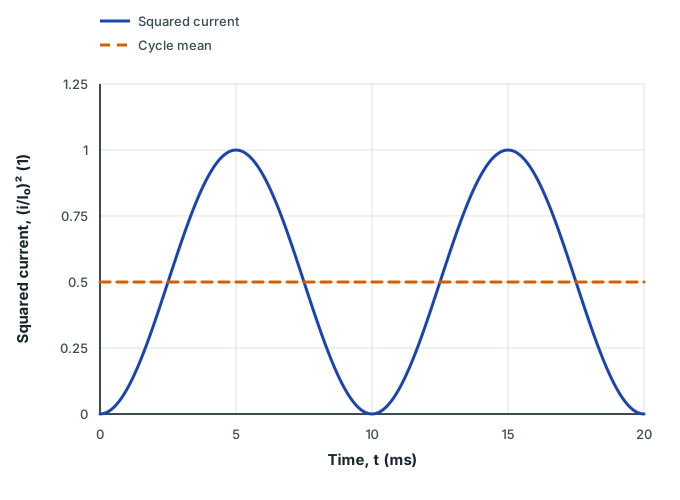
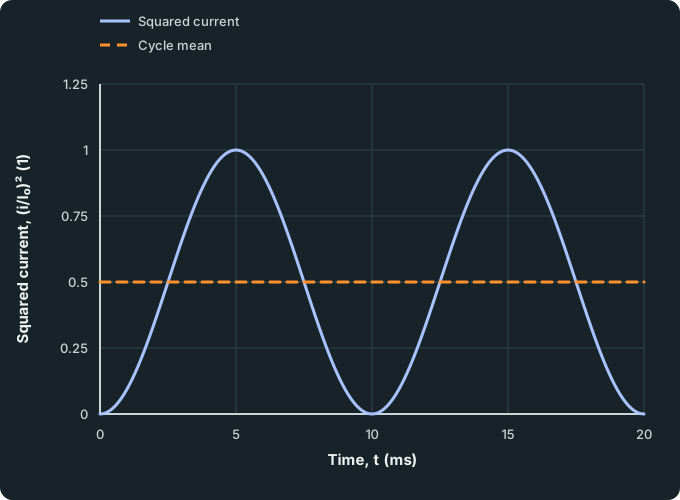
View figure data
| Time, t (ms) | Squared current | Cycle mean |
|---|---|---|
| 0.0 | 0.0000000 | 0.5 |
| 0.1 | 0.0009866 | 0.5 |
| 0.2 | 0.0039426 | 0.5 |
| 0.3 | 0.0088564 | 0.5 |
| 0.4 | 0.0157084 | 0.5 |
| 0.5 | 0.0244717 | 0.5 |
| 0.6 | 0.0351118 | 0.5 |
| 0.7 | 0.0475865 | 0.5 |
| 0.8 | 0.0618467 | 0.5 |
| 0.9 | 0.0778360 | 0.5 |
| 1.0 | 0.0954915 | 0.5 |
| 1.1 | 0.1147434 | 0.5 |
| 1.2 | 0.1355157 | 0.5 |
| 1.3 | 0.1577264 | 0.5 |
| 1.4 | 0.1812880 | 0.5 |
| 1.5 | 0.2061074 | 0.5 |
| 1.6 | 0.2320866 | 0.5 |
| 1.7 | 0.2591232 | 0.5 |
| 1.8 | 0.2871104 | 0.5 |
| 1.9 | 0.3159377 | 0.5 |
| 2.0 | 0.3454915 | 0.5 |
| 2.1 | 0.3756551 | 0.5 |
| 2.2 | 0.4063093 | 0.5 |
| 2.3 | 0.4373334 | 0.5 |
| 2.4 | 0.4686047 | 0.5 |
| 2.5 | 0.5000000 | 0.5 |
| 2.6 | 0.5313953 | 0.5 |
| 2.7 | 0.5626666 | 0.5 |
| 2.8 | 0.5936907 | 0.5 |
| 2.9 | 0.6243449 | 0.5 |
| 3.0 | 0.6545085 | 0.5 |
| 3.1 | 0.6840623 | 0.5 |
| 3.2 | 0.7128896 | 0.5 |
| 3.3 | 0.7408768 | 0.5 |
| 3.4 | 0.7679134 | 0.5 |
| 3.5 | 0.7938926 | 0.5 |
| 3.6 | 0.8187120 | 0.5 |
| 3.7 | 0.8422736 | 0.5 |
| 3.8 | 0.8644843 | 0.5 |
| 3.9 | 0.8852566 | 0.5 |
| 4.0 | 0.9045085 | 0.5 |
| 4.1 | 0.9221640 | 0.5 |
| 4.2 | 0.9381533 | 0.5 |
| 4.3 | 0.9524135 | 0.5 |
| 4.4 | 0.9648882 | 0.5 |
| 4.5 | 0.9755283 | 0.5 |
| 4.6 | 0.9842916 | 0.5 |
| 4.7 | 0.9911436 | 0.5 |
| 4.8 | 0.9960574 | 0.5 |
| 4.9 | 0.9990134 | 0.5 |
| 5.0 | 1.0000000 | 0.5 |
| 5.1 | 0.9990134 | 0.5 |
| 5.2 | 0.9960574 | 0.5 |
| 5.3 | 0.9911436 | 0.5 |
| 5.4 | 0.9842916 | 0.5 |
| 5.5 | 0.9755283 | 0.5 |
| 5.6 | 0.9648882 | 0.5 |
| 5.7 | 0.9524135 | 0.5 |
| 5.8 | 0.9381533 | 0.5 |
| 5.9 | 0.9221640 | 0.5 |
| 6.0 | 0.9045085 | 0.5 |
| 6.1 | 0.8852566 | 0.5 |
| 6.2 | 0.8644843 | 0.5 |
| 6.3 | 0.8422736 | 0.5 |
| 6.4 | 0.8187120 | 0.5 |
| 6.5 | 0.7938926 | 0.5 |
| 6.6 | 0.7679134 | 0.5 |
| 6.7 | 0.7408768 | 0.5 |
| 6.8 | 0.7128896 | 0.5 |
| 6.9 | 0.6840623 | 0.5 |
| 7.0 | 0.6545085 | 0.5 |
| 7.1 | 0.6243449 | 0.5 |
| 7.2 | 0.5936907 | 0.5 |
| 7.3 | 0.5626666 | 0.5 |
| 7.4 | 0.5313953 | 0.5 |
| 7.5 | 0.5000000 | 0.5 |
| 7.6 | 0.4686047 | 0.5 |
| 7.7 | 0.4373334 | 0.5 |
| 7.8 | 0.4063093 | 0.5 |
| 7.9 | 0.3756551 | 0.5 |
| 8.0 | 0.3454915 | 0.5 |
| 8.1 | 0.3159377 | 0.5 |
| 8.2 | 0.2871104 | 0.5 |
| 8.3 | 0.2591232 | 0.5 |
| 8.4 | 0.2320866 | 0.5 |
| 8.5 | 0.2061074 | 0.5 |
| 8.6 | 0.1812880 | 0.5 |
| 8.7 | 0.1577264 | 0.5 |
| 8.8 | 0.1355157 | 0.5 |
| 8.9 | 0.1147434 | 0.5 |
| 9.0 | 0.0954915 | 0.5 |
| 9.1 | 0.0778360 | 0.5 |
| 9.2 | 0.0618467 | 0.5 |
| 9.3 | 0.0475865 | 0.5 |
| 9.4 | 0.0351118 | 0.5 |
| 9.5 | 0.0244717 | 0.5 |
| 9.6 | 0.0157084 | 0.5 |
| 9.7 | 0.0088564 | 0.5 |
| 9.8 | 0.0039426 | 0.5 |
| 9.9 | 0.0009866 | 0.5 |
| 10.0 | 0.0000000 | 0.5 |
| 10.1 | 0.0009866 | 0.5 |
| 10.2 | 0.0039426 | 0.5 |
| 10.3 | 0.0088564 | 0.5 |
| 10.4 | 0.0157084 | 0.5 |
| 10.5 | 0.0244717 | 0.5 |
| 10.6 | 0.0351118 | 0.5 |
| 10.7 | 0.0475865 | 0.5 |
| 10.8 | 0.0618467 | 0.5 |
| 10.9 | 0.0778360 | 0.5 |
| 11.0 | 0.0954915 | 0.5 |
| 11.1 | 0.1147434 | 0.5 |
| 11.2 | 0.1355157 | 0.5 |
| 11.3 | 0.1577264 | 0.5 |
| 11.4 | 0.1812880 | 0.5 |
| 11.5 | 0.2061074 | 0.5 |
| 11.6 | 0.2320866 | 0.5 |
| 11.7 | 0.2591232 | 0.5 |
| 11.8 | 0.2871104 | 0.5 |
| 11.9 | 0.3159377 | 0.5 |
| 12.0 | 0.3454915 | 0.5 |
| 12.1 | 0.3756551 | 0.5 |
| 12.2 | 0.4063093 | 0.5 |
| 12.3 | 0.4373334 | 0.5 |
| 12.4 | 0.4686047 | 0.5 |
| 12.5 | 0.5000000 | 0.5 |
| 12.6 | 0.5313953 | 0.5 |
| 12.7 | 0.5626666 | 0.5 |
| 12.8 | 0.5936907 | 0.5 |
| 12.9 | 0.6243449 | 0.5 |
| 13.0 | 0.6545085 | 0.5 |
| 13.1 | 0.6840623 | 0.5 |
| 13.2 | 0.7128896 | 0.5 |
| 13.3 | 0.7408768 | 0.5 |
| 13.4 | 0.7679134 | 0.5 |
| 13.5 | 0.7938926 | 0.5 |
| 13.6 | 0.8187120 | 0.5 |
| 13.7 | 0.8422736 | 0.5 |
| 13.8 | 0.8644843 | 0.5 |
| 13.9 | 0.8852566 | 0.5 |
| 14.0 | 0.9045085 | 0.5 |
| 14.1 | 0.9221640 | 0.5 |
| 14.2 | 0.9381533 | 0.5 |
| 14.3 | 0.9524135 | 0.5 |
| 14.4 | 0.9648882 | 0.5 |
| 14.5 | 0.9755283 | 0.5 |
| 14.6 | 0.9842916 | 0.5 |
| 14.7 | 0.9911436 | 0.5 |
| 14.8 | 0.9960574 | 0.5 |
| 14.9 | 0.9990134 | 0.5 |
| 15.0 | 1.0000000 | 0.5 |
| 15.1 | 0.9990134 | 0.5 |
| 15.2 | 0.9960574 | 0.5 |
| 15.3 | 0.9911436 | 0.5 |
| 15.4 | 0.9842916 | 0.5 |
| 15.5 | 0.9755283 | 0.5 |
| 15.6 | 0.9648882 | 0.5 |
| 15.7 | 0.9524135 | 0.5 |
| 15.8 | 0.9381533 | 0.5 |
| 15.9 | 0.9221640 | 0.5 |
| 16.0 | 0.9045085 | 0.5 |
| 16.1 | 0.8852566 | 0.5 |
| 16.2 | 0.8644843 | 0.5 |
| 16.3 | 0.8422736 | 0.5 |
| 16.4 | 0.8187120 | 0.5 |
| 16.5 | 0.7938926 | 0.5 |
| 16.6 | 0.7679134 | 0.5 |
| 16.7 | 0.7408768 | 0.5 |
| 16.8 | 0.7128896 | 0.5 |
| 16.9 | 0.6840623 | 0.5 |
| 17.0 | 0.6545085 | 0.5 |
| 17.1 | 0.6243449 | 0.5 |
| 17.2 | 0.5936907 | 0.5 |
| 17.3 | 0.5626666 | 0.5 |
| 17.4 | 0.5313953 | 0.5 |
| 17.5 | 0.5000000 | 0.5 |
| 17.6 | 0.4686047 | 0.5 |
| 17.7 | 0.4373334 | 0.5 |
| 17.8 | 0.4063093 | 0.5 |
| 17.9 | 0.3756551 | 0.5 |
| 18.0 | 0.3454915 | 0.5 |
| 18.1 | 0.3159377 | 0.5 |
| 18.2 | 0.2871104 | 0.5 |
| 18.3 | 0.2591232 | 0.5 |
| 18.4 | 0.2320866 | 0.5 |
| 18.5 | 0.2061074 | 0.5 |
| 18.6 | 0.1812880 | 0.5 |
| 18.7 | 0.1577264 | 0.5 |
| 18.8 | 0.1355157 | 0.5 |
| 18.9 | 0.1147434 | 0.5 |
| 19.0 | 0.0954915 | 0.5 |
| 19.1 | 0.0778360 | 0.5 |
| 19.2 | 0.0618467 | 0.5 |
| 19.3 | 0.0475865 | 0.5 |
| 19.4 | 0.0351118 | 0.5 |
| 19.5 | 0.0244717 | 0.5 |
| 19.6 | 0.0157084 | 0.5 |
| 19.7 | 0.0088564 | 0.5 |
| 19.8 | 0.0039426 | 0.5 |
| 19.9 | 0.0009866 | 0.5 |
| 20.0 | 0.0000000 | 0.5 |
Check your understanding 1 Zero average, non-zero heating
A current is + 2.0 A for half a cycle and -2.0 A for the other half. Calculate its mean current and its r.m.s. current. Explain why a resistor still heats.
Show the steps Optional working
Show answer
The mean current is (2.0-2.0)/2 = 0. The mean square is (4.0 + 4.0)/2 = 4.0 A², giving Iᵣₘₛ = 2.0 A. Heating depends on I²R, which is positive in both directions.
Check your understanding 2 Explain the heating
Explain why zero mean current does not imply zero mean power. Compare averaging before and after squaring.
Show answer
Compare ⟨I⟩²R with ⟨I²⟩ R. Opposite currents cancel in the mean of I; their squares do not cancel. A resistor heats in both directions.
R.m.s. value of a sinusoid
For I = I₀ sin ω t, I² = I₀² sin² ω t. Since sin² θ = (1/2)(1- cos 2θ) and cos 2θ averages to zero over a cycle, the mean of sin² ω t is 1/2. So ⟨I²⟩ = (1/2)I₀² and
These hold only for a sinusoid. For any other waveform, go back to square, mean, root.
Mains voltage ratings are quoted as r.m.s. values. The 230 V mains has a peak of 230 square root of 2 = 325 V.
Worked example 1
From r.m.s. value to equation
Problem
A sinusoidal current has an r.m.s. value of 3.00 A and a frequency of 60.0 Hz. It is zero and increasing at t = 0. Write an equation for the current.
Show full solution
Peak value
Method
Multiply the r.m.s. current by square root of 2.Reason
The number in front of the sine must be the peak, not the r.m.s. value.Working
Answer
I₀ = square root of 2 × 3.00 = 4.24 A
Angular frequency
Reason
ω = 2π f.Working
Answer
ω = 2π × 60.0 = 120π rad s⁻¹
Equation
Working
Answer
I = 4.24 sin(120π t), with I in amperes and t in seconds
Quick check
The peak is larger than the r.m.s. value, as it must be: the current spends most of each cycle below its peak.
Guided practice 2
What an r.m.s. voltage means
Problem
A sinusoidal voltage has a peak value of 20.0 V. Find its r.m.s. value, and state what that value means for a resistor connected to it.
Find the r.m.s. voltage
Hints
Hint 1
meaning
The meaning is a comparison with a steady voltage across the same resistor.
Show full solution
Value and meaning
Working
Answer
Vᵣₘₛ = 20.0/(square root of 2) = 14.1 V. A steady 14.1 V across the same resistor would give the same mean power.
Spot the mistake 3
Which number is the r.m.s. current?
Learner claim
For I = 5.00 sin(100π t), in amperes, a student says the r.m.s. current is 5.00 A. What does 5.00 A represent, and what is the r.m.s. current?
Try this before viewing the solution
Show solution step by step
Read the peak
Method
Identify 5.00 A as the peak I₀.Reason
sin(100π t) varies between -1 and + 1, so the current varies between -5.00 A and + 5.00 A.Working
Answer
I₀ = 5.00 A
Convert
Working
Answer
Iᵣₘₛ = 5.00/(square root of 2) = 3.54 A
Common mistake
The coefficient in this sinusoidal equation is the peak value. A steady 5.00 A would heat a resistor twice as fast as this alternating current.
Try it yourself 4
A pulsed current
Problem
A repeating current is 4.0 A for one quarter of each cycle and zero for the other three quarters. Find its r.m.s. value.
Find the r.m.s. current
Show the steps Optional working
Hints
Hint 1
not a sinusoid
I₀/square root of 2 does not apply. Weight each value of I² by the fraction of the cycle it lasts.
Show solution step by step
Mean square
Reason
The current is 4.0 A for a quarter of the time and zero otherwise.Working
Answer
⟨I²⟩ = (1/4)(4.0)² + (3/4)(0)² = 4.0 A²
Root
Working
Answer
Iᵣₘₛ = square root of 4.0 = 2.0 A
Quick check
The ordinary mean current is 1/4 × 4.0 = 1.0 A, which is smaller: the r.m.s. value gives more weight to the large values, because heating depends on I².
Exam-style question 1
The mains supply
Examination question
A sinusoidal mains supply is labelled 230 V, 50.0 Hz.
(a) Explain what is meant by the r.m.s. value of an alternating voltage. [2 marks]
(b) Calculate the peak voltage of the supply. [1 mark]
(c) The voltage is zero and increasing at t = 0. Write an equation for the voltage V at time t. [2 marks]
Write your answer before viewing the mark scheme
Show solution step by step
(a) Meaning
2 marksMethod
Compare with a steady voltage across the same resistor.Reason
The r.m.s. value is defined by equal heating.Working
Answer
It is the steady (direct) voltage that would produce the same mean power in the same resistor.
(b) Peak
1 markReason
Mains labels give r.m.s. values.Working
Answer
V₀ = square root of 2 × 230 = 325 V
(c) Equation
2 marksWorking
Answer
ω = 2π × 50.0 = 100π rad s⁻¹, so V = 325 sin(100π t), in volts
Self-mark with the mark scheme
Tick each mark point that your answer includes.
Tick each point only if your answer states it clearly.
Common mistakes
- Putting the r.m.s. value in front of the sine instead of the peak.
- Treating the r.m.s. value as the average current; the average of a sinusoid over a cycle is zero.
- Using I₀/square root of 2 for a waveform that is not a full sinusoid, such as a half-wave rectified or square wave.
- Taking the square root before averaging.
Spotted an error? Report a correction
Syllabus and review details
- GCE A-Level H2 Physics 2027 · 2027
Content Overview, PDF pages 9–10; Subject Content, PDF pages 11–30
Last reviewed: